To cross the Atlantic by sail is to accept a simple truth: the ocean is not impressed by romance. It rewards preparation, patience and the humility to leave on the weather’s schedule, not your own. The passage can be magnificent, with trade-wind days, flying fish on deck and nights so dark the Milky Way seems close enough to touch. It can also be wet, tiring and mechanically unforgiving.
The Atlantic is not one route. It is a set of weather systems, currents and seasonal risks. The right crossing depends on direction, boat, crew and appetite for discomfort. A well-found yacht matters, but judgment matters more.
The classic westbound route: Europe to the Caribbean
The best-known westbound passage leaves from the Canary Islands, often Las Palmas, and heads toward the Caribbean, commonly Saint Lucia, Martinique, Barbados or Antigua. The direct run from the Canaries to Saint Lucia is roughly 2,700 nautical miles, which is why the Atlantic Rally for Cruisers, known as the ARC, traditionally starts from Las Palmas in late November.
This route works because of the northeast trade winds, the same broad system that helped shape centuries of Atlantic navigation. Sailors typically move south from mainland Europe to Madeira or the Canaries, wait for the trades to settle, then head west or southwest. A common old maxim is: go south until the butter melts, then turn right. It is not a navigation plan, but it captures the logic. Get into reliable warmth and easterly winds before committing to the ocean.
For many cruising yachts, a westbound crossing takes 16 to 25 days, depending on hull speed, sail handling, route and weather. A performance boat with an experienced crew may be faster. A heavily loaded cruising yacht may be slower. The important fact is that once you leave, help is far away and minor problems have time to become major ones.
Season matters more than bravado
For the Canaries-to-Caribbean route, the usual season is late November through January. Leave too early and tropical-storm risk remains a serious concern. The official Atlantic hurricane season runs from June 1 to November 30, with activity often peaking around September. Leave too late and winter systems in the North Atlantic can complicate the approach to the Canaries and the early part of the passage.
There is no perfect month, only a better risk profile. December often brings established trades, but also acceleration zones near islands and occasional squalls. January can be steadier, though some crews prefer to arrive in the Caribbean before Christmas. Weather routing, whether by a professional shore router or a disciplined skipper using GRIB files and forecasts, is not a luxury. It is modern seamanship.
“The departure date is part of the safety equipment.”
Eastbound: the harder mental passage
The eastbound Atlantic crossing, from the Caribbean or the East Coast of the United States to Europe, is a different proposition. The common route runs from the Caribbean to Bermuda, then the Azores, then onward to Portugal, Spain, France, Britain or Ireland. From Antigua to the Azores is roughly 2,200 nautical miles; from Bermuda to the Azores about 1,800.
The favored season is generally May to July, after the harshest winter lows but before the heart of hurricane season. The strategy is to use the westerlies of the North Atlantic while avoiding deep lows and the worst of the Gulf Stream’s wind-against-current violence. The Azores are the great mid-ocean gift: a volcanic refuge, a repair stop and, often, a morale reset.
Eastbound sailing is frequently more variable than the westbound trade-wind sleigh ride. Crews should expect calms near the Azores High, frontal passages, damp cold and more upwind or close-reaching work. A boat that has been comfortable in the Caribbean may reveal weaknesses when pressed in colder, rougher water.
The yacht: what must be right before departure
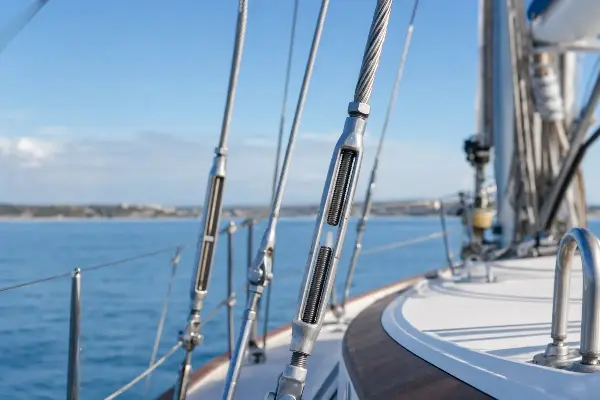
Ocean preparation begins with the rig. A mast failure offshore is not merely expensive; it is dangerous. Standing rigging should be inspected by a qualified rigger, with particular attention to terminals, chainplates, swages, turnbuckles and corrosion hidden behind fittings. Many insurers become cautious around standing rigging older than about 10 years, though age alone is not a complete diagnosis.
Steering deserves equal attention. Autopilots do heroic work offshore, but they fail often enough that no prudent skipper relies on one system. Carry spares for the drive, ram or control system if possible. Know how to rig an emergency tiller. A windvane, on many cruising boats, remains one of the most elegant pieces of ocean equipment ever invented: silent, tireless and indifferent to battery voltage.
Chafe is the Atlantic’s patient saboteur. Sheets, halyards, preventers, reefing lines and furling gear need inspection and protection. Carry spare blocks, shackles, soft shackles, line, webbing and sail repair materials. Reefing systems must be simple enough to use at night, tired, in rain, by a clipped-in crew member who has not slept properly in three days.
Safety gear is not decoration
An offshore yacht should carry a properly serviced life raft, EPIRB, flares or approved electronic distress signals where appropriate, AIS, VHF, satellite communication, jacklines, harnesses, tethers and a stocked medical kit. A ditch bag should be ready, not assembled during a crisis. Fire extinguishers, bilge pumps and seacocks need sober attention. Water ingress is still one of the oldest enemies at sea.
Satellite messengers and broadband devices have changed ocean sailing, but they have not abolished self-reliance. Downloading forecasts is useful only if someone aboard can interpret them. AIS is powerful, but not every vessel transmits. Radar helps in squalls and shipping lanes, but it consumes power. Redundancy is the theme: two ways to navigate, two ways to communicate, more than one way to charge batteries, and enough water if the watermaker stops.
Crew, watches and the quiet strain
Many Atlantic problems are human before they are technical. Fatigue leads to poor decisions. Seasickness weakens morale. A vague command structure becomes dangerous when the weather turns. Before departure, the skipper should make clear who decides what, how watches work, when life jackets and tethers are mandatory, and what conditions trigger reefing.
Food matters more than people admit. So do dry bunks, working heads and a place to brace while cooking. A crossing is not a race to prove suffering. The best ocean crews are conservative early: they reef before dark, eat before they are starving and fix small things immediately.
The real preparation is judgment
A bluewater yacht does not need to be new, large or glamorous. Many modest boats have crossed safely; many expensive yachts have been humbled. The difference is usually preparation, maintenance and decisions made before the first gale. The Atlantic is crossed every year by families, retirees, racers and delivery crews. That frequency can make the voyage seem routine. It is not.
The ocean passage begins months before land disappears. It begins in the boatyard, at the chart table, in the rigging report, in the weather files and in honest conversations among the crew. Done well, crossing the Atlantic by sail is not an escape from reality. It is a long, exacting encounter with it.