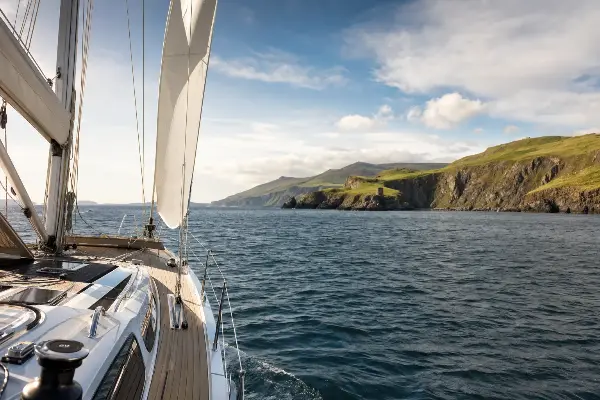
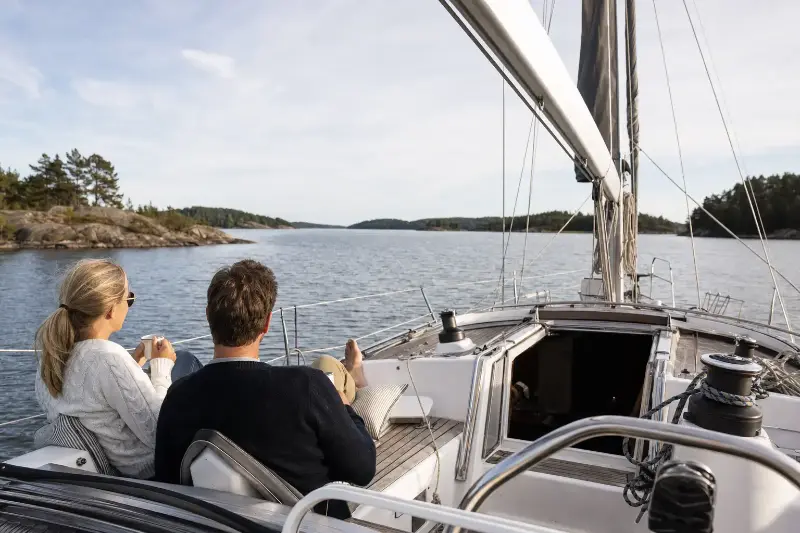
For couples who like their romance with a little salt on it, Sweden’s archipelago is one of Europe’s great summer stages. It is not showy in the Mediterranean sense. There are no superyacht parades, no beach clubs thumping past midnight, no need to dress for dinner unless you count a clean wool sweater. Its seduction is quieter: granite warmed by the sun, pine trees leaning over brackish water, a cockpit supper eaten at 10 p.m. while the sky still refuses to go dark.
Sweden is often described as a country of islands, and in summer that feels literal. The Stockholm archipelago alone is commonly counted at about 30,000 islands, islets and skerries, spreading east from the capital into the Baltic Sea. On the west coast, Bohuslän offers a different beauty: smooth pink granite, fishing villages, and open-water sailing shaped by the Kattegat and Skagerrak. For a sailing date, honeymoon, or relationship test disguised as a holiday, few places are better.
Why It Works So Well for Couples
The best romantic sailing is not about distance. It is about rhythm. Sweden gives you short passages, sheltered waters and endless choices. You can sail for two hours, anchor off a wooded island, swim, read, cook, then move again after coffee if the mood changes. In July, long daylight makes the day feel generous. In Stockholm, sunset comes late; farther north, the summer light stretches even longer.
"The archipelago rewards couples who can slow down without becoming passive."
That matters. A boat compresses space and reveals habits. One person coils lines neatly; the other believes a rope heap is a philosophy. One wants to reef early; the other wants to see what happens. Sweden’s archipelago offers enough calm and beauty to soften those negotiations, but it still asks for respect. The rocks are real. The channels can be narrow. The Baltic is almost tideless, which simplifies planning, but water levels can still shift with wind and pressure. Navigation is not optional.
Stockholm or the West Coast?
First-time visitors often start near Stockholm, and for good reason. You can fly in, provision easily, and be among islands within hours. Classic stops include Vaxholm, often called the gateway to the archipelago; Grinda, known for walking paths and swimming rocks; and Sandhamn, a historic sailing hub near the outer edge. The mood changes as you sail east. The city falls away, houses thin out, and the sea begins to feel larger.
The west coast is more elemental. Bohuslän, north of Gothenburg, is famous among sailors for its bare granite islands and handsome harbors such as Marstrand, Käringön and Smögen. The water is saltier than in the Baltic, the horizon more open, and the sailing can feel more muscular. If Stockholm is a long conversation, Bohuslän is a bracing walk in good shoes.
The Swedish Secret: Freedom With Manners
Sweden’s right of public access, known as allemansrätten, is one reason sailing here feels so liberating. In broad terms, it allows people to roam, swim and spend time in nature, provided they do not disturb or destroy. For boaters, that spirit helps make wild anchoring part of the culture. But it is not a license to treat every island as your private resort. Stay away from homes and private gardens, take all rubbish with you, avoid damaging vegetation, and be careful with fire. Local fire bans are common in dry summers.
This is also where a couple’s character shows. Anyone can be charming at a candlelit restaurant. It is more revealing to see who carries the trash bag back to the boat without being asked.
How to Make the Trip Romantic, Not Stressful
Do not overplan. The archipelago looks close-packed on a chart, and it is tempting to build an itinerary with too many stops. Resist. Choose a region, identify a few safe harbors and anchorages, then let weather and mood decide the rest. A good Swedish sailing day may include only 12 nautical miles.
Assign roles before leaving the dock. One person can handle navigation notes and depth checks; the other can manage lines and fenders. Switch roles if both are comfortable, but do not turn docking into theater. In Scandinavia, competence is attractive; shouting is not.
Provision with intention. Summer in Sweden is a pleasure if you eat simply: new potatoes with dill, smoked fish, crispbread, strawberries, hard cheese, cucumbers and good coffee. Remember that stronger alcohol is sold through Systembolaget, the state-run stores, with limited opening hours, not in ordinary supermarkets. Forgetting this is a classic visitor mistake.
Safety Is Part of the Seduction
A life jacket may not look cinematic, but neither does a preventable emergency. Swedish waters can be cold even when the air is warm, and falling in fully clothed is serious. Check forecasts from reliable sources such as SMHI, Sweden’s meteorological agency. Carry updated charts, know how to use them, and do not rely only on a phone battery. Many charter boats include a chart plotter, but the archipelago’s charm is also its hazard: there are countless rocks, and not all of them are forgiving.
If you are chartering, be honest about your experience. A skippered charter can be the wiser choice for couples who want the sailing atmosphere without the responsibility. There is no shame in hiring skill. In fact, it may leave more room for conversation, swimming and the small silences that make a trip memorable.
The Date You Remember
The lasting image of Sweden’s archipelago is rarely dramatic. It is more likely to be a quiet anchorage, a swim ladder, a gull calling somewhere behind the trees, and the two of you eating dinner from enamel bowls while the boat turns gently at anchor. That is the point. The place does not force romance. It creates the conditions for it: space, light, water, and just enough seamanship to make you pay attention.
For couples, that may be the real gift of sailing here. Sweden’s thousands of islands do not ask you to perform love. They ask you to navigate, share, wait for wind, and notice the evening. Done well, that is more intimate than any grand gesture.