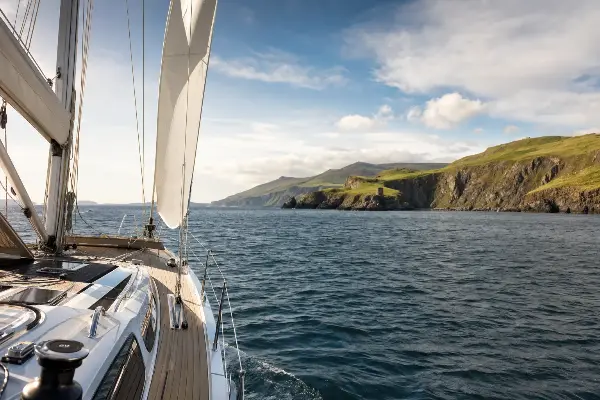
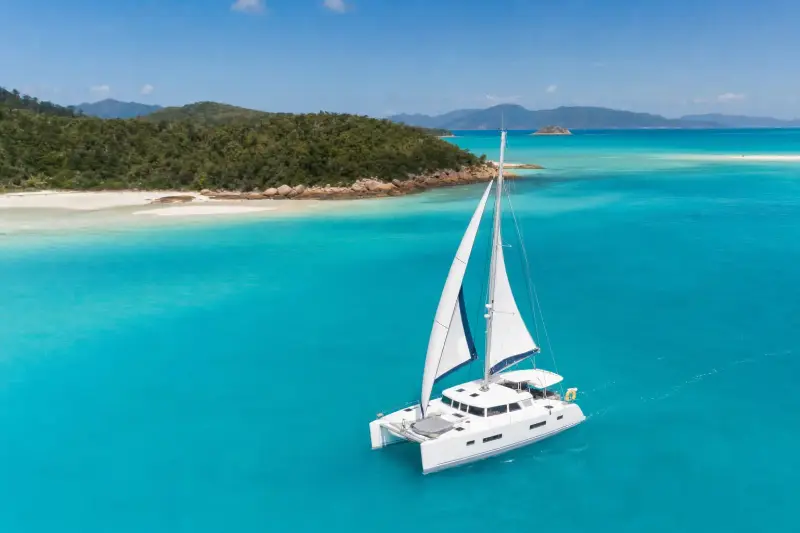
The Whitsundays make a persuasive case for being one of the world’s great bareboat sailing grounds not because they are wild, but because they are civilized in exactly the right ways. The islands are close together. The water is mostly protected. The scenery looks almost implausibly polished: green headlands, pale beaches, turquoise shallows and, on a clear day, the darker blue line of the Coral Sea beyond the reef.
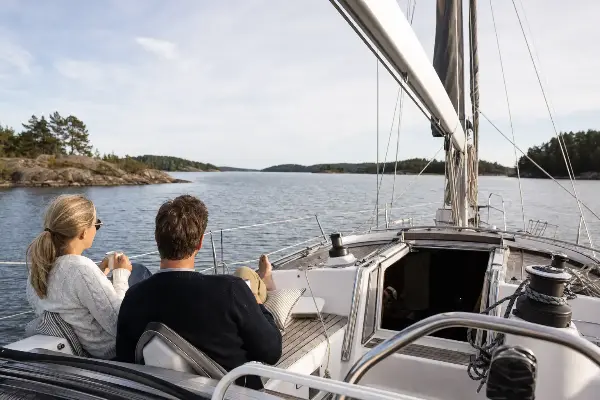
This is not ocean voyaging. It is not meant to be. A Whitsundays bareboat charter is usually a week of short passages, careful anchoring, swims off the stern, and evenings in bays where the loudest sound may be a halyard tapping against a mast. For sailors who want adventure without a punishing learning curve, few places are better designed by geography.
A cruising ground built for bareboating
The Whitsundays are a group of 74 islands off the coast of Queensland, northeast of Airlie Beach, and within the Great Barrier Reef region. Many are uninhabited, and much of the surrounding water lies inside protected marine park zones. The reef offshore helps moderate ocean swell, while the islands themselves create a network of anchorages that can be chosen according to wind direction.
That combination is the secret. In many celebrated sailing destinations, the reward comes with long passages or exposed seas. In the Whitsundays, the distances are modest. A morning sail may be all that is required to move from one bay to another. A skipper can build confidence without feeling trapped by an overambitious route.
“Bareboat” does not mean careless freedom. It means you are the skipper, the cook, the navigator and the person responsible for leaving the reef exactly as you found it.
No license, but not no responsibility
One reason the region is so popular with visiting crews is that many charter companies do not require a formal boat license for a standard bareboat charter. That does not mean anyone can simply step aboard and go. Operators assess experience, provide briefings and may set limits based on conditions and competence. Charterers are typically given a defined cruising area, radio procedures, anchoring instructions and local safety rules.
This system works because the Whitsundays have a mature charter culture. Airlie Beach, Shute Harbour and Hamilton Island are established gateways, with fleets ranging from monohulls to large cruising catamarans. The pre-departure briefing is not a formality. It is where crews learn how to read the local charts, avoid coral bommies, use moorings, protect the fringing reefs and plan around tides.
The appeal of short hops and big scenery
A typical itinerary might include Cid Harbour, Nara Inlet, Border Island, Hook Island and Whitehaven Beach. The route changes with wind and weather, but the rhythm is consistent: sail, anchor, swim, walk, sleep. The distances are forgiving enough that a family crew or a couple on their first charter can still feel the pleasure of seamanship.
Whitehaven Beach is the postcard, and for good reason. Its sand is famously high in silica, giving it a bright white color and a soft, cool feel underfoot. At the northern end, Hill Inlet creates shifting patterns of sand and water that look different with every tide. It is beautiful, but it is also busy. The wiser sailor treats it as one chapter, not the whole book.
Nara Inlet, by contrast, offers a quieter kind of power. Its steep-sided anchorage gives shelter, and nearby walking tracks lead to sites connected with the Ngaro people, the Traditional Custodians with a long history in the islands. The Whitsundays are often sold as a leisure playground, but they are also a cultural landscape, and good cruising requires respect for both.
When to go, and what the weather asks of you
The most comfortable sailing period is often considered to be the Australian winter and spring, roughly May through October, when humidity is lower and the southeast trade winds are more predictable. That said, the trades can still blow hard. A forecast of 20 to 25 knots is not unusual, and inexperienced crews should be honest about what that means for reefing, anchoring and docking.
Summer brings warmer water and more humidity, along with a higher chance of tropical lows and cyclones. It is also marine stinger season in northern Queensland, generally associated with the warmer months. Charter crews are commonly advised to wear stinger suits when swimming or snorkeling during risk periods. This is not a reason to avoid the Whitsundays; it is a reason to behave like a local and take precautions seriously.
Why catamarans dominate the charter docks
Traditionalists may prefer a monohull, and there is pleasure in that heel and feel. But the modern Whitsundays bareboat fleet is heavily influenced by catamarans for practical reasons. They offer shallow draft, generous living space, stable platforms for families and easy access to the water. In anchorages where the evening meal is cooked aboard and the cockpit becomes the dining room, beam matters.
Still, a bigger boat is not always a simpler boat. More windage means more attention at anchor and on moorings. Twin engines help with maneuvering, but they do not replace judgment. The best charter skippers are not necessarily the most experienced sailors; they are the ones who slow down, plan early and ask questions before the wind makes decisions expensive.
The reef changes the ethics of the trip
Sailing in the Whitsundays comes with a rare privilege: access to waters connected to the Great Barrier Reef, one of the planet’s most significant marine systems. That privilege has rules. Crews should use public moorings where available, avoid anchoring on coral, follow zoning restrictions, take rubbish back to shore and keep a respectful distance from wildlife.
The reef has endured bleaching events, cyclone damage and pressure from warming seas. Cyclone Debbie, which struck the region in 2017, left visible scars in parts of the islands and reefs, though tourism and natural recovery have continued. A charter holiday can feel carefree, but the setting is fragile. The best sailors understand that restraint is part of seamanship.
The verdict
The Whitsundays are not perfect. Popular anchorages can be crowded in peak periods. Weather can pin a crew down. Coral navigation demands attention, and the glossy brochure version rarely mentions the discipline required to set an anchor well at dusk. But these are manageable realities, not disqualifications.
What makes the area exceptional is the balance: enough protection for newcomers, enough beauty for veterans, enough infrastructure to make the trip workable and enough wildness to make each anchorage feel earned. For a first bareboat charter, it is hard to imagine a kinder classroom. For an experienced sailor, it is a reminder that the best cruising grounds do not always require heroic passages. Sometimes they require only a fair breeze, a prudent plan and the humility to let the islands set the pace.