For sailors, Cuba is the rare Caribbean destination that still feels large enough to be discovered slowly. The island is not obscure, of course. It is the Caribbean’s largest island, with roughly 3,500 miles of coastline, a location at the mouth of the Gulf of Mexico and a maritime history shaped by Spain, sugar, revolution, fishing fleets and passing yachts. Yet as a cruising ground, it remains oddly under-discussed compared with the British Virgin Islands, St. Martin or the Grenadines.
That is part of its appeal. Cuba by sail is not a polished circuit of beach bars and mooring balls. It is a route of long reaches, reef entrances, sleepy fishing settlements, colonial harbors and wide anchorages where the night can feel genuinely dark. It asks more of a skipper. It also gives more back.
Why Cuba feels different from the usual Caribbean itinerary
Much of the modern Caribbean charter map is built around convenience. Short hops. Reliable marinas. Restaurant docks. A predictable rhythm of swim, lunch, sail, sundowner. Cuba resists that formula. Distances are longer, services are less uniform and the cruising infrastructure is thinner. That does not make it inferior; it makes it a more serious passage-making destination.
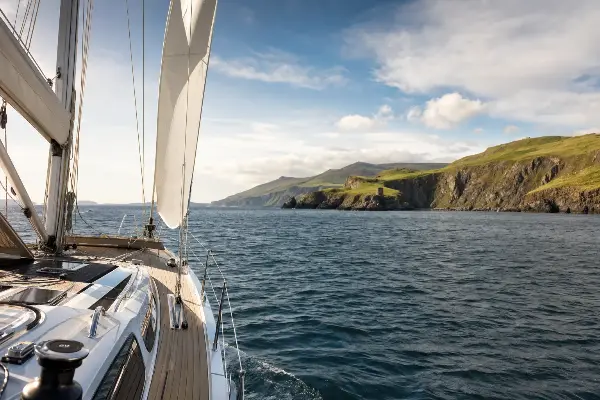
The island’s geography is the main event. Cuba stretches roughly east to west, with the Florida Straits and Bahamas to the north and the Caribbean Sea to the south. Its offshore archipelagos contain thousands of cays and islets, many fringed by coral and mangrove. For a yacht crew, that means both opportunity and caution: dazzling water, good shelter in places, but also reefs that demand alert navigation, updated charts and conservative daylight approaches.
"Cuba is not a plug-and-play charter ground. It is a sailor’s country: beautiful, complicated and best approached with humility."
The classic gateways: Havana, Varadero and Cienfuegos
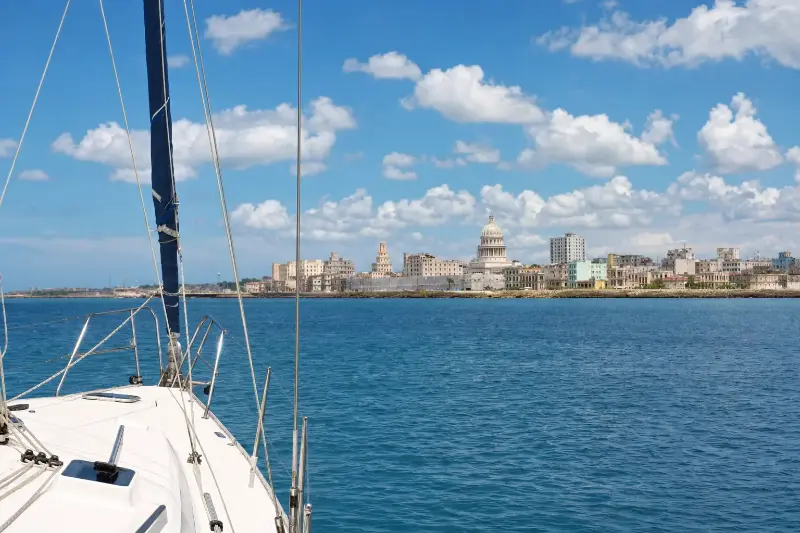
Most foreign yachts use official ports of entry, and sailors should confirm current rules before departure because procedures can change. Havana is the symbolic arrival, especially through Marina Hemingway, west of the city. The approach brings an unmistakable sense of history: the Malecón, old forts, American cars, salt air and the sense that the harbor has seen every kind of empire and argument.
Varadero, on the north coast, offers a more conventional resort-adjacent entry point, with marina services that can be useful for crews arriving from Florida or the Bahamas. Cienfuegos, on the south coast, may be the most elegant base for a deeper cruise. Its protected bay is one of the Caribbean’s fine natural harbors, and the city, founded by French settlers in the 19th century, has a calmer architectural grace than Havana’s grand theater of decay and endurance.
From Cienfuegos, a yacht can work west toward the Canarreos Archipelago or east toward Trinidad and beyond, depending on time, weather and tolerance for remote cruising. This is where Cuba begins to separate casual vacationers from committed sailors.
The southern route: reefs, cays and room to breathe
The south coast is often the more compelling cruising side. It is more sheltered from the strongest northerly systems that sweep down in winter, though not immune to weather. The Canarreos, including Cayo Largo, offer pale sand, shallow banks and the kind of turquoise water that makes even seasoned crews fall quiet. Cayo Largo has long been a known stop for yachts, partly because it provides a rare combination of anchorage, beach and services in an otherwise sparse region.
Farther east, Jardines de la Reina — the Gardens of the Queen — is one of Cuba’s natural treasures. The archipelago is famous among divers and marine scientists for healthy reefs, sharks, groupers and mangrove nurseries. Access can be regulated, and visiting sailors should treat the area as an ecological privilege, not a playground. The best cruising cultures are built on restraint: anchor carefully, avoid damaging coral, take nothing and leave even less.
This southern itinerary is not about rushing from one Instagram stop to another. It rewards patient crews who like plotting routes, watching cloud lines, listening to local advice and understanding why older sailors still talk about seamanship as a moral habit, not just a technical skill.
The north coast: tempting, exposed and strategic
The north coast has its own logic. It is strategically convenient for boats coming from Florida or the Bahamas, and it places Havana and Varadero within reach. But sailors must account for exposure to the Florida Straits, fast-moving cold fronts in winter and the set of currents. The Gulf Stream is not a theoretical line on a chart; it is a force that can turn a sloppy forecast into an exhausting crossing.
For many crews, the north coast works best as an arrival or departure corridor, while the south coast supplies the richer cruising. That said, experienced navigators with time can find rewarding anchorages and historic ports along both sides of the island. The key is not to impose a BVI timetable on Cuba. The island is too big, the logistics too variable and the weather too consequential.
Practical realities: paperwork, provisioning and politics
A Cuba sailing plan should begin with regulations, not romance. U.S. travelers face specific restrictions: ordinary tourism to Cuba remains prohibited under U.S. rules, though certain authorized categories of travel exist. Yacht owners and crew should consult current guidance from the U.S. Treasury’s Office of Foreign Assets Control, Customs and Border Protection and the Coast Guard, as well as Cuban entry requirements. Non-U.S. sailors also need to verify visa, insurance and vessel documentation rules.
Provisioning is another reality check. Do not expect the easy abundance of major charter hubs. Bring critical spares, filters, belts, engine fluids, medical supplies and navigation backups. Fuel availability should be confirmed locally. Cash can matter, internet access may be uneven and repairs may require patience. None of this is a reason not to go. It is a reason to go prepared.
When to sail Cuba
The most popular Caribbean sailing season generally runs from late fall through spring, when temperatures are pleasant and hurricane risk is lower. Hurricane season officially runs from June through November across the Atlantic basin, and Cuba has a long history with major storms. Winter, however, brings cold fronts, especially on the north coast, so crews should not confuse non-hurricane season with benign weather. Good forecasting, flexible routing and conservative reef navigation remain essential.
The real luxury is space
Cuba’s underrated status is not an accident. Politics, regulation, limited infrastructure and the island’s own economic hardships have kept mass yachting at bay. That creates inconveniences, but it also preserves something scarce in the Caribbean: space. Space between anchorages. Space from the expected. Space to think about where you are, not merely what you can consume there.
To sail Cuba well is to accept that the voyage will not always be smooth. The reward is a coastline of rare scale and character, where a yacht is not just a floating hotel room but a means of entering the country at its own pace. For sailors tired of over-managed paradise, Cuba may be the Caribbean route hiding in plain sight.