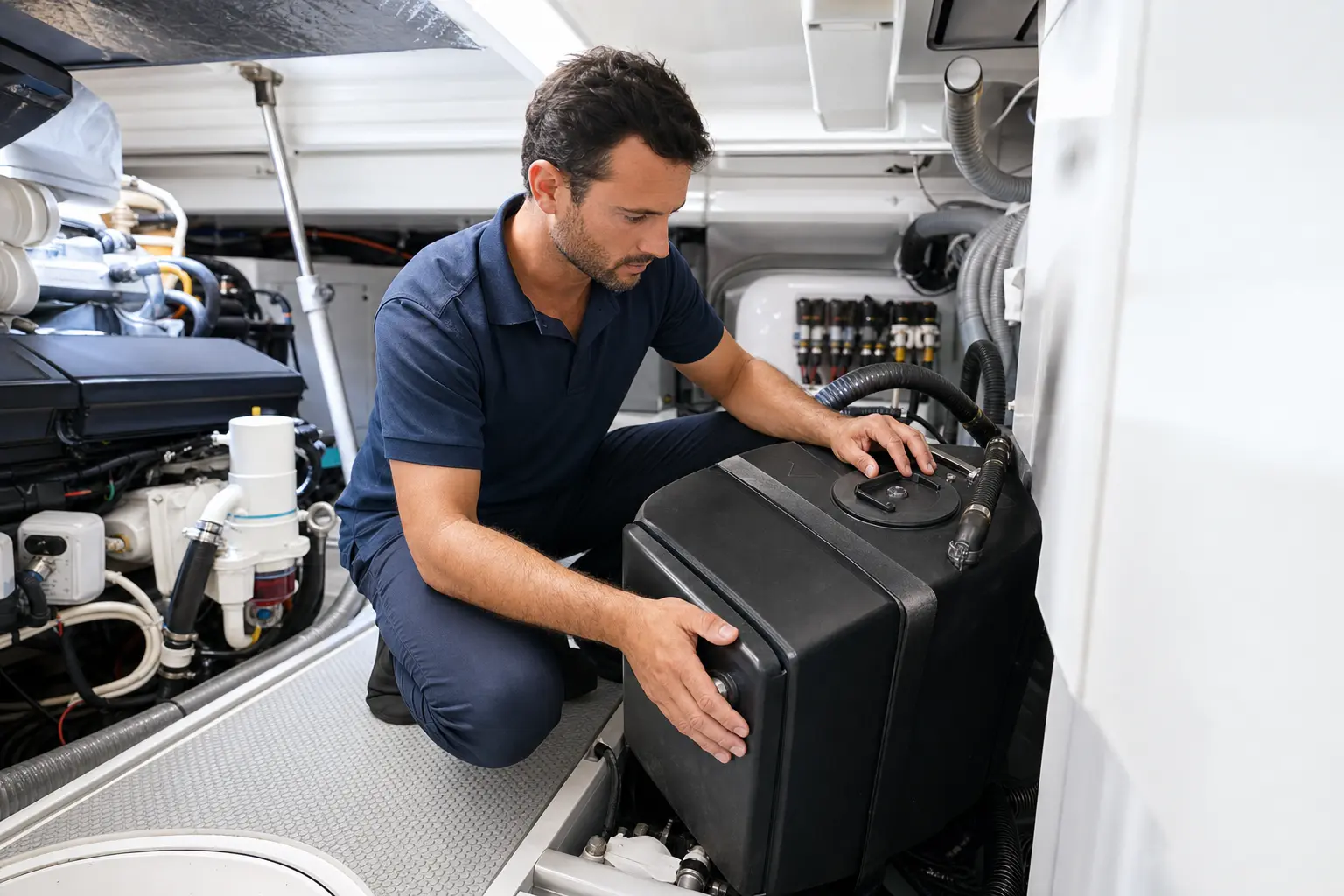
On a yacht, luxury often depends on an unglamorous piece of equipment hidden beneath a berth or cabin sole: the black water tank. It holds toilet waste until it can be legally and safely discharged or pumped ashore. When it works, nobody talks about it. When it fails, it can dominate the entire boat.
Black water systems are simple in theory: a marine toilet sends sewage through sanitation hose into a holding tank, which is emptied through a deck pump-out fitting or, where legal, overboard through a discharge pump or macerator. In practice, the system sits in a warm, moving, salt-air environment, often with limited ventilation and long periods of disuse. That is why rules, odors and maintenance all matter.
"A well-kept black water system is not a luxury feature. It is part of seamanship."
What black water is, and what it is not
Black water is wastewater from toilets. It is distinct from gray water, which comes from sinks, showers, galley drains and laundry. Some cruising grounds regulate gray water too, especially in sensitive anchorages, but sewage is treated more strictly because it can contain pathogens, nutrients and organic matter that harm swimmers, shellfish beds and fragile marine ecosystems.
Modern yachts usually carry a Type III marine sanitation device, meaning a holding tank. Larger yachts may have onboard treatment systems, but most private cruising boats rely on pump-out stations, marina facilities or legal offshore discharge. The tank may be polyethylene, fiberglass or metal, though stainless steel and aluminum are poor choices over time because sewage chemistry can be corrosive.
The rules: location matters
There is no single global rule for every yacht in every harbor. The broad international framework is MARPOL Annex IV, which governs sewage pollution from ships on international voyages, mainly vessels of 400 gross tonnage and above or those certified to carry more than 15 people. Under MARPOL, untreated sewage generally cannot be discharged unless the vessel is more than 12 nautical miles from the nearest land and en route. Comminuted and disinfected sewage may be discharged beyond 3 nautical miles, while approved treatment plants have their own conditions.
Many recreational yachts fall outside parts of MARPOL, but that does not make them free agents. National and local laws often set stricter standards. In the United States, untreated sewage discharge is prohibited within 3 nautical miles of shore, and federally designated No Discharge Zones ban even treated sewage discharges. In those waters, a Y-valve must be secured so waste cannot be sent overboard. The Great Lakes, many inland waters and numerous bays and harbors have especially tight controls.
In Europe, rules vary by country and cruising area. The Baltic Sea has long been a focus of sewage controls because it is shallow, brackish and slow to flush. Parts of the Mediterranean also impose local restrictions in marinas, marine parks and crowded anchorages. The safest habit is simple: check the local notice to mariners, marina guidance and flag-state requirements before assuming discharge is allowed.
Why black water tanks smell
The smell is not inevitable. It is usually evidence of a design issue, a maintenance lapse or a component reaching the end of its life. The classic rotten-egg odor comes from anaerobic bacteria producing hydrogen sulfide and other sulfur compounds. These bacteria thrive when a tank lacks oxygen, when waste sits too long or when seawater organisms die inside the plumbing.
Seawater-flush toilets can smell worse than freshwater systems because seawater contains sulfates and marine life. Left stagnant in hoses, it can become foul before it even reaches the tank. That is why many yachtsmen flush with fresh water before leaving the boat. It is also why vacuum toilets, which use less water, and freshwater-flush electric toilets are popular on newer yachts.
Another common culprit is hose permeation. Sanitation hose ages, and over time odor molecules can pass through its walls. A crude but useful test is to wipe the hose with a clean damp cloth, remove the cloth from the boat, then smell it. If the cloth carries sewage odor, the hose may be permeated. Good sanitation hose costs more than ordinary hose for a reason.
Ventilation is the overlooked cure
A black water tank needs a working vent. Without it, pump-outs become difficult, toilets burp, and anaerobic conditions intensify. Vents should be clear, not kinked, and ideally large enough to move air. Some boats have tiny vent lines that clog with salt crystals, insects or dried waste. A clogged vent can even cause a tank to swell during flushing or collapse during pump-out.
Charcoal vent filters can reduce dockside odor, but they are not a substitute for proper airflow. They also have to be replaced. If a filter gets wet, it can block ventilation and make smells worse. In many cases, improving the vent line is more effective than adding chemicals.
Maintenance that actually works
The best maintenance program is not complicated. Pump out before the tank is completely full. Rinse the tank periodically through the deck fitting if the system allows it. Flush enough water to move waste all the way through the hose, but do not flood the tank unnecessarily. Before leaving the boat, flush fresh water through the toilet and lines.
Avoid putting anything into a marine toilet except human waste and rapid-dissolving marine toilet paper. Wipes labeled flushable are notorious for clogging joker valves, macerators and pump-out lines. Feminine products, paper towels and cooking grease do not belong in the system.
Chemicals deserve restraint. Strong formaldehyde treatments are discouraged or banned in some places because they can interfere with shoreside treatment plants and harm the environment. Bleach can attack rubber parts and should not be mixed with other chemicals. Many owners prefer enzyme, nitrate or oxygen-based treatments, which aim to support aerobic breakdown rather than simply perfume the tank. They are not magic, but they can help when the tank is properly vented.
Parts to inspect before they fail
The joker valve in a manual or electric toilet is a small rubber part with an outsized role: it helps prevent backflow. When it stiffens or distorts, odors and waste can return toward the bowl. Replacing it annually is cheap insurance on many boats.
Check hose clamps, deck pump-out caps, tank inspection ports and discharge pumps. A cracked deck cap O-ring can let rainwater into the tank or release odor on deck. A failing macerator may still make noise while moving little. Mineral scale, often a mix of calcium compounds and struvite from urine, can narrow hoses until they clog. Mild acid descaling products can help, but they should be used according to the toilet and hose manufacturers recommendations.
The civilized standard
Good black water practice is partly legal compliance and partly courtesy. Nobody wants to swim beside a yacht that is discharging sewage in an anchorage. Nobody wants dinner in a cockpit downwind of a vent that smells like a failed septic tank. And no skipper wants to explain to guests why a head is out of service halfway through a cruise.
The civilized standard is clear: know the local rules, use pump-outs whenever practical, keep the tank ventilated, replace aging hoses and valves, and treat odors as symptoms rather than normal boat life. On a yacht, comfort is often sold in teak, varnish and electronics. But real comfort may begin with a clean, legal and odor-free black water tank.