Choosing between a catamaran and a monohull is less a question of which boat is better than which set of compromises you prefer. Both can cross oceans. Both can carry a family through a summer cruise or earn income in charter. But they do it with very different habits, costs and resale stories.
Space and comfort at anchor
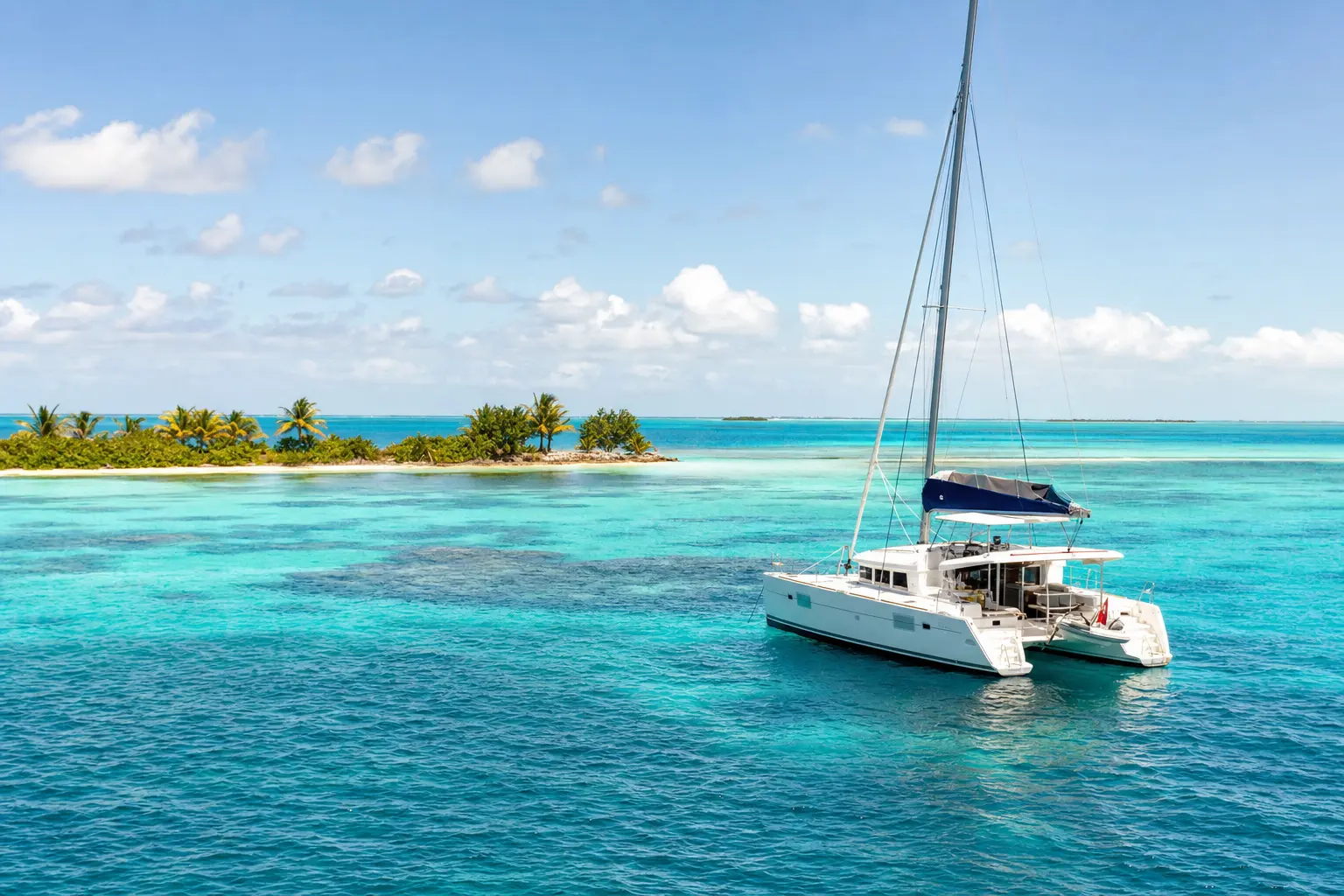
The catamaran wins the first impression. Two hulls create a wide platform, a large cockpit and a saloon that often sits on the same level as the aft deck. For families, charter guests or owners who spend long periods at anchor, that space matters. There is room for privacy, separate cabins, shaded lounging and easier movement.
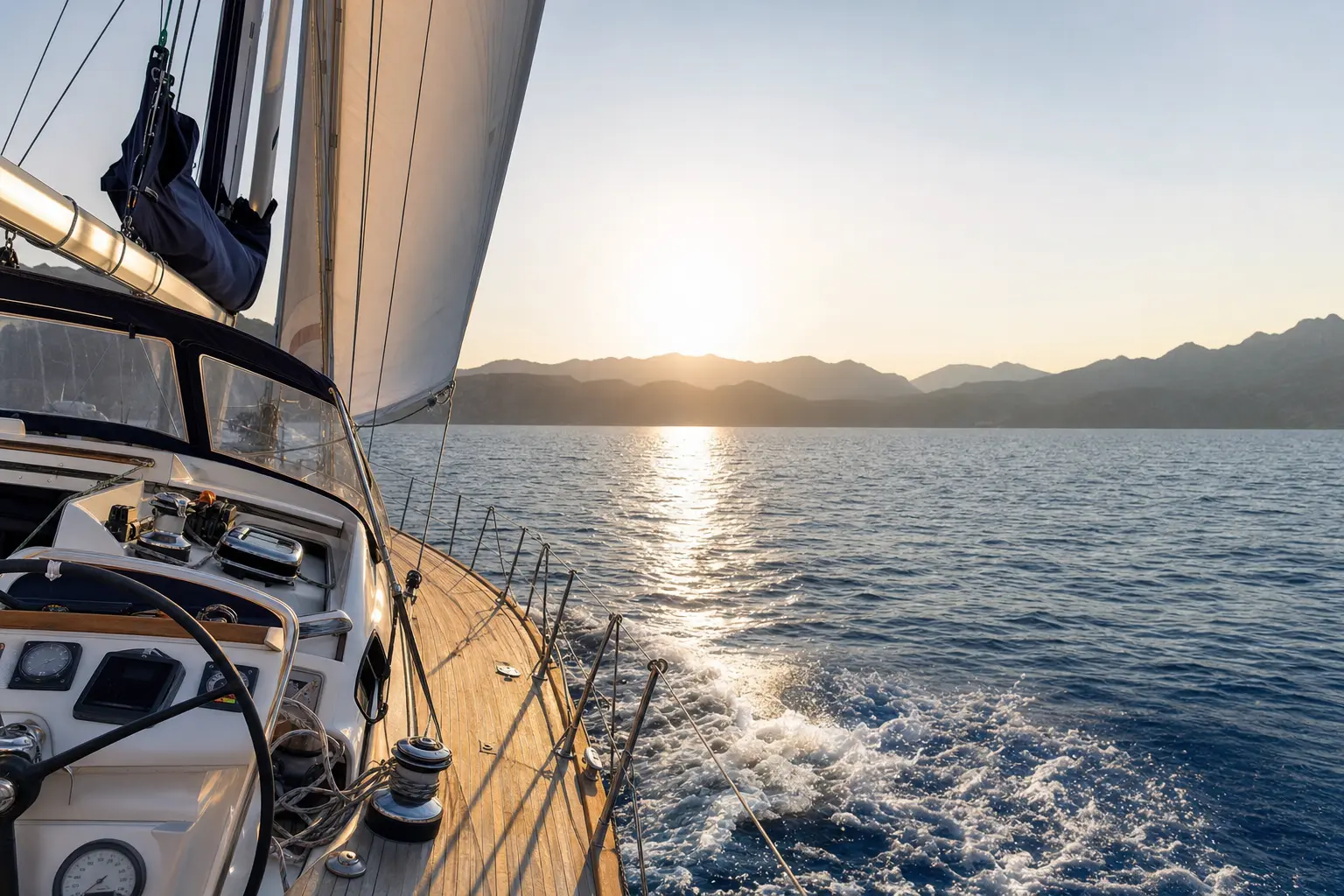
The most obvious comfort difference is heel. A monohull sails leaning over; a catamaran typically remains far flatter. For some sailors, heel is the romance of sailing. For many guests, especially first-time charter clients, it is the moment they start looking for a handhold. A flatter boat can make cooking, sleeping and moving around easier.
"The best boat is the one whose compromises match your sailing life."
Performance under sail
Catamarans are often faster on reaches because they are lighter for their length and have less wetted surface. A well-designed cruising cat can cover miles efficiently in trade-wind conditions. But not all cats are light, and many charter-oriented models carry heavy interiors, air-conditioning, generators, watermakers and big dinghies. Weight is the enemy of catamaran performance.
Monohulls usually point higher into the wind and give clearer feedback through the helm. Their motion is familiar: they heel, dig in and recover. Offshore sailors often like that conversation with the boat. A catamaran can feel quick and quiet, but also less communicative. Reefing early is important, because a multihull does not heel dramatically to warn the crew that it is overpowered.
Safety and seakeeping
A modern cruising monohull carries ballast, usually in a keel, and is generally designed to right itself after a knockdown. That self-righting ability is one of the classic arguments for monohulls offshore. It also brings draft and the risk of keel damage in a grounding.
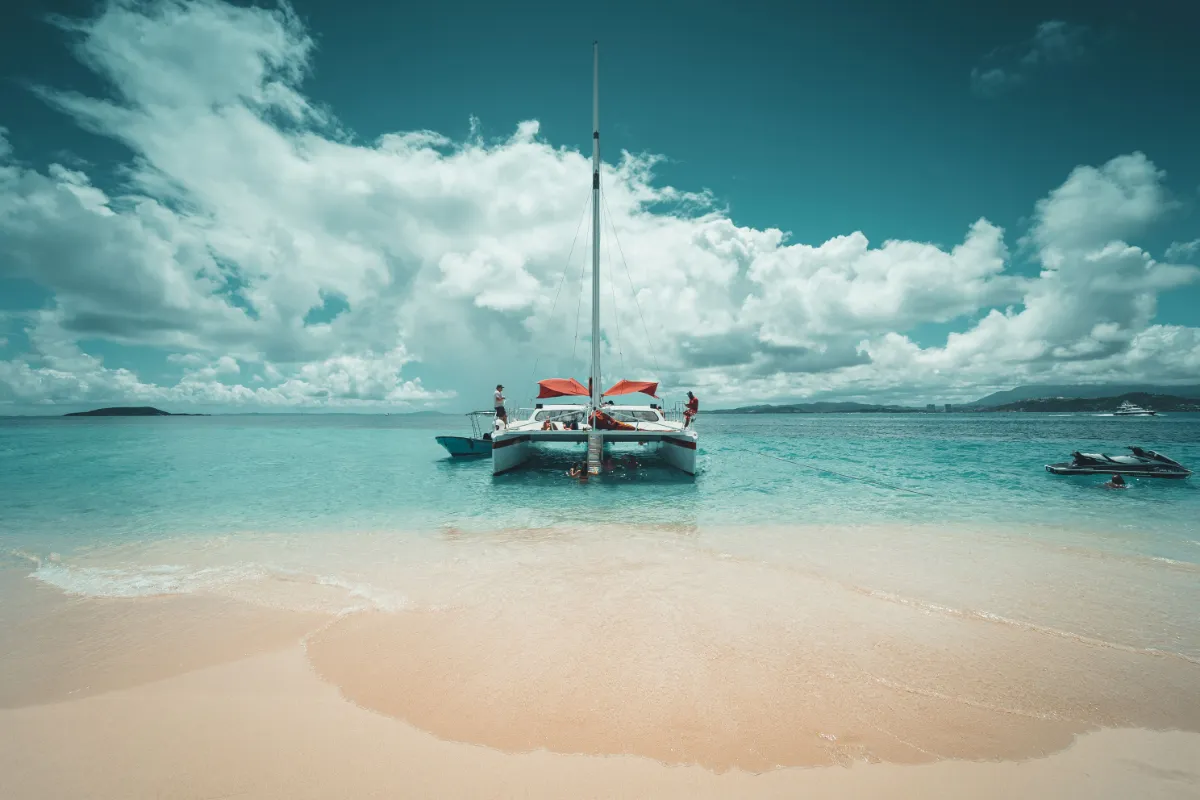
A catamaran has great initial stability, but if capsized it will not self-right in the way a ballasted monohull can. That sounds stark, but context matters. Capsizes of cruising cats are uncommon when boats are sailed conservatively, loaded sensibly and reefed early. Catamarans also have redundancy: two engines, two hulls and often separated systems. Their shallow draft lets them anchor in protected water that deeper monohulls cannot reach.
Handling in marinas
Catamarans can be surprisingly easy to maneuver. Twin engines set far apart allow the skipper to spin the boat in tight quarters with little drama. The challenge is width. Many marinas charge more for catamarans, and some older harbors simply have limited berths for beamy boats.
Monohulls are narrower, cheaper to berth in many places and often easier to find space for on short notice. Under power, a single-screw monohull with prop walk may demand more practice, but its footprint is smaller. For cruising in crowded Mediterranean ports, that can be a decisive advantage.
Costs: purchase, maintenance and berthing
Comparable catamarans usually cost more to buy than monohulls of similar length. They also have more structure, more deck hardware and commonly two engines. Haul-out can be more expensive because not every yard can lift a wide multihull. Sails, rigging and electronics costs vary by boat, but cats often carry larger domestic systems because owners expect home-like comfort.
Monohulls tend to offer a lower entry price and wider service access around the world. A 45-foot monohull is a familiar object in most yards. A 45-foot catamaran may require a wider lift, more expensive storage and careful planning. Over a long ownership period, those practical details become real money.
Chartering appeal
For bareboat charter, especially in the Caribbean, the catamaran has become the default aspirational boat. Guests love the space, private cabins, easy swimming access and stable platform. A cat is forgiving at anchor, sociable in the cockpit and marketable in photographs. Charter operators know this, which is why fleets in the British Virgin Islands, Bahamas and parts of the Mediterranean have shifted heavily toward multihulls.
Monohulls still have a place in charter, particularly for sailors who want a more traditional experience or lower weekly rates. They are often less expensive to book, use less marina width and deliver the feel many trained sailors expect. But for mixed groups where comfort outranks sailing purity, the catamaran is usually easier to sell.
Resale value
Resale depends on brand, age, survey condition, engine hours, accident history and maintenance records more than hull type alone. Still, demand matters. Popular production catamarans from established builders can hold value well because charter companies, private buyers and liveaboards all compete for them. The downside is that heavily chartered cats may show hard use: tired gelcoat, worn upholstery, engine hours and system fatigue.
Monohulls have a broader and deeper used market. There are more buyers at lower price points and more comparable boats. That can make pricing transparent, but also competitive. A clean, well-equipped monohull from a respected builder may sell steadily, though not always with the same scarcity premium that desirable cats can command.
Which should you choose?
Choose a catamaran if your priorities are space, stable living, shallow anchorages, charter income potential and guest comfort. It is the stronger platform for groups and warm-water cruising, provided you accept higher purchase, berthing and maintenance costs.
Choose a monohull if you value sailing feel, lower costs, easier marina access, traditional offshore behavior and a larger used-boat market. It may be the better choice for sailors who enjoy the act of sailing as much as the destination.
The honest answer is that neither hull form is a universal winner. The best cruising boat is the one you can afford to maintain, handle safely and use often. In boats, as in weather, romance is useful. But seamanship begins with clear eyes.