
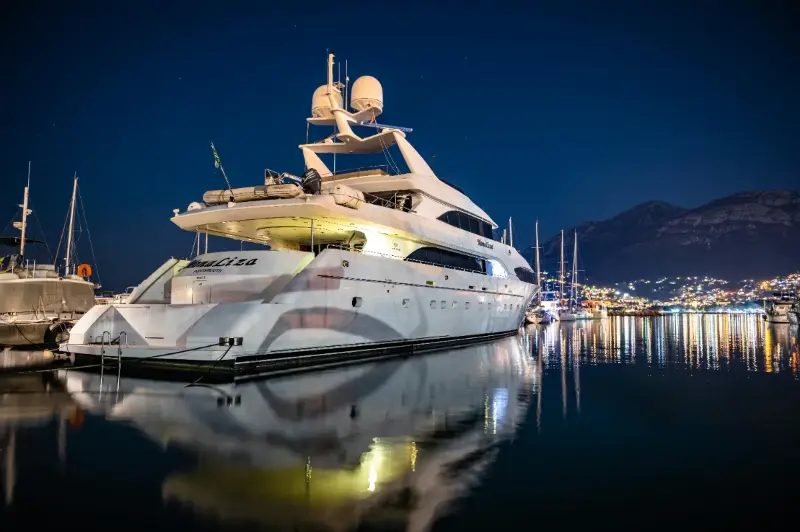
Yacht ownership begins with a number everyone can see: the asking price. But the real cost is written in smaller type. It appears in marina contracts, haul-out invoices, insurance renewals, engine hours, bottom paint, torn canvas, expired flares and the quiet fact that salt water is never off duty.
A useful rule of thumb is that a yacht can cost roughly 10 percent of its purchase price each year to own and operate. That figure is not a law of nature. A careful owner of a simple 38-foot sailboat may spend less. A heavily used motor yacht in a hurricane-prone marina may spend far more. But as a planning number, 10 percent is valuable because it forces the buyer to look beyond the romance of the listing photos.
"The purchase price is the cover charge. The annual costs are the membership dues."
The first cost: buying the boat
Prices vary wildly by age, brand, condition and equipment. A sound used 35- to 40-foot cruising sailboat might sell for $80,000 to $250,000. A new performance cruiser or well-equipped catamaran can run from several hundred thousand dollars to well over $1 million. Motor yachts climb faster: a modern 60-footer can easily pass $1 million, while larger crewed yachts enter a financial category closer to real estate than recreation.
Then come transaction costs. A marine survey, often essential for both buyers and insurers, may cost hundreds to several thousand dollars depending on size and complexity. A sea trial, haul-out for inspection, documentation, taxes and broker-related expenses can add materially to the closing bill. If the boat is in another state or country, delivery can become its own line item.
Dockage: the rent you pay the shoreline
Unless you keep the yacht on a private dock, you will pay for a slip or mooring. In less crowded cruising grounds, dockage may be comparatively modest. In South Florida, New England summer harbors, the Mediterranean or major city marinas, it can be startling. Marinas often charge by the foot, and larger boats pay not just for length but for scarce beam, power and location.
A 40-foot boat may cost several thousand dollars a year in a basic marina and far more in a prime one. A 70-foot yacht in a desirable resort marina can face annual dockage bills that resemble college tuition. Add electricity, water, winter storage or hurricane storage, and the dock becomes one of the most predictable recurring expenses.
Maintenance: salt water always collects
Every yacht is a small mechanical ecosystem. Engines need oil, filters, belts, impellers and periodic service. Sailboats need rig inspections, sail repairs, winch servicing and standing rigging replacement on a schedule that prudent owners do not ignore. Motor yachts need more fuel systems, cooling systems and moving parts. Electronics age quickly. Refrigeration fails at the worst possible time.
Bottom paint is another constant. Marine growth slows boats and increases fuel burn, so most yachts are hauled and painted every one to three years depending on location and paint type. Haul-outs, pressure washing, zinc anodes, propeller service and through-hull checks can turn a simple maintenance week into a five-figure yard visit for larger vessels.
The old saying in boatyards is that deferred maintenance is not savings; it is debt with barnacles. A neglected hose, seacock or battery bank can become an emergency instead of an invoice.
Insurance and the weather map
Yacht insurance depends on value, location, owner experience, navigation area and storm exposure. Annual premiums often fall around 1 to 2 percent of insured value, though this can be higher for older boats, high-performance vessels, ocean passages or boats kept in hurricane zones. Insurers may require updated surveys, named-storm plans and specific haul-out arrangements.
Coverage details matter. A cheaper policy may limit navigation, exclude certain damage or carry high deductibles. For boats financed by lenders, insurance is usually mandatory. For everyone else, it is still a sober recognition that one grounding, lightning strike or marina fire can change the economics instantly.
Fuel, crew and the cost of using it
Sailing yachts can be economical underway, but they are not free. Diesel is used for docking, charging, motoring through calms and running generators. Motor yachts are another matter. Fuel burn rises sharply with speed and horsepower. A displacement trawler may sip fuel at modest speeds; a planing yacht can burn tens or even hundreds of gallons per hour.
Crew is the dividing line between expensive and professionally expensive. Many yachts under 50 feet are owner-operated. Larger vessels may need a captain, mate, engineer, steward or seasonal help. Salaries, payroll obligations, uniforms, travel, training and crew food can easily become the largest annual expense on a yacht over 80 feet.
What a realistic budget looks like
For a $200,000 used 40-foot cruiser, an owner might reasonably budget $15,000 to $30,000 a year, depending on dockage, upgrades and how much work is done personally. For a $1.2 million 60-foot motor yacht, annual ownership could land between $100,000 and $180,000 before major refits. For a crewed superyacht, annual costs can reach 10 to 15 percent of value, sometimes more.
None of this means yacht ownership is irrational. It means it should be entered with clear eyes. A yacht buys access to mornings at anchor, passages measured by weather instead of traffic, and a form of freedom that remains rare because it is demanding. The happiest owners are not necessarily the richest. They are the ones who budget honestly, maintain early and understand that the sea does not negotiate.
"If the annual cost still feels acceptable after you have priced the unglamorous items, you may be ready to own the yacht."