
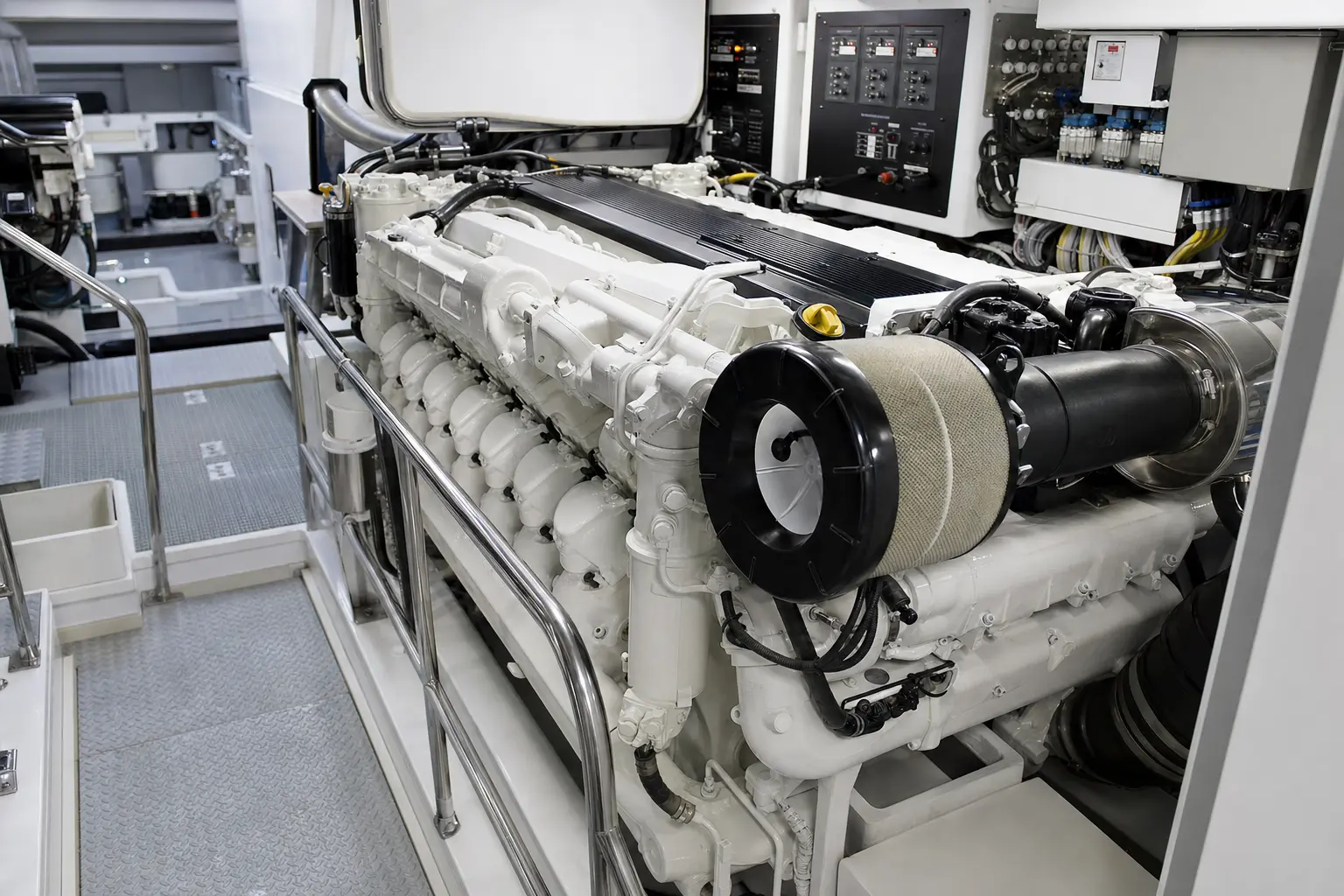
For many yacht buyers, the engines are the least romantic part of the dream. They sit below the salon, hot and loud, surrounded by hoses, filters, belts and wiring. Yet on a diesel yacht, the machinery space is often where the real value of the vessel lives. A handsome interior can be refreshed. Electronics can be replaced. A tired or neglected diesel engine can turn a bargain into a six-figure lesson.
Diesel power dominates larger cruising yachts for good reasons. Diesel fuel is less volatile than gasoline, marine diesels produce strong low-speed torque, and a well-maintained engine can run for thousands of hours. But buyers should not confuse durability with invincibility. Marine diesels fail most often not because they are badly designed, but because they are poorly installed, lightly used, overheated, under-maintained or asked to push too much boat at the wrong rpm.
Hours matter, but not the way many buyers think
Engine hours are useful, but they are not a simple equivalent of mileage on a car. A 15-year-old yacht with 600 hours may sound attractive until you consider what those hours mean: long periods of inactivity, old fuel, internal corrosion risk, dried seals and deferred service. A commercial-style diesel that has run regularly under proper load may be healthier than a lightly used recreational engine that spent most of its life at the dock.
Context is everything. Ask how the yacht was used. Was it run offshore at steady cruising speeds? Was it used for short harbor trips? Did it sit in warm salt water for months between starts? Diesels like to work. Repeated idling and chronic underloading can contribute to carbon buildup and glazed cylinder walls, especially in engines that rarely reach proper operating temperature.
"Low hours are not automatically good news. They are simply a question that needs an answer."
The survey should be mechanical, not just general
A standard yacht survey is not enough. For a serious purchase, hire a qualified diesel mechanic or engine surveyor familiar with the engine brand, whether it is Caterpillar, Cummins, MAN, MTU, Volvo Penta, Yanmar or another builder. A good mechanical survey may include visual inspection, sea trial data, oil and coolant analysis, inspection of mounts and exhaust systems, checks for leaks, and an electronic control module download on engines that support it.
Oil analysis is not magic, but it can be revealing. Elevated metals may point to internal wear; coolant in oil is a major warning sign. Coolant analysis can indicate corrosion, contamination or exhausted additives. The value is strongest when results are compared with prior samples, which is one reason maintenance records matter so much.
Maintenance records are evidence, not decoration
Buyers should ask for invoices, not just verbal assurances. Look for regular oil and filter changes, fuel filter service, impeller replacements, valve adjustments where required, coolant changes and documented heat exchanger or aftercooler service. Manufacturer schedules vary, but many marine engines require annual service even when hours are low. Saltwater systems, in particular, do not pause their aging process just because the yacht stays tied up.
Aftercoolers deserve special attention. On many turbocharged marine diesels, the aftercooler cools compressed intake air and helps the engine make power efficiently. If seawater-side components are neglected, corrosion can become expensive fast. A leaking aftercooler can send water where it does not belong. That is why experienced buyers often treat aftercooler service history as a serious line item, not a footnote.
The sea trial tells the truth
A proper sea trial should be more than a pleasant ride. The engines should start cleanly, reach normal operating temperature, hold steady oil pressure and achieve the manufacturer’s rated wide-open-throttle rpm under load. If an engine cannot reach rated rpm, the cause may be as simple as a fouled bottom or over-pitched propellers, or as serious as restricted fuel flow, turbocharger trouble or internal wear.
Watch the exhaust. A brief puff of smoke at startup may not be alarming, especially on older engines. Persistent black smoke often suggests overloading, insufficient air, fuel problems or dirty running gear. Blue smoke can indicate oil burning. White smoke may be unburned fuel or steam, depending on smell, temperature and conditions. None of these signs should be interpreted in isolation, but none should be ignored.
Fuel burn is about speed, load and hull form
Diesel engines are efficient, but yachts are not economy cars. Modern marine diesels often have specific fuel consumption in the broad range of roughly 0.32 to 0.40 pounds of fuel per horsepower-hour at efficient operating points. In plain English, fuel burn climbs quickly as horsepower demand rises. Push a planing yacht a few knots faster and consumption can jump dramatically.
Displacement and semi-displacement hulls obey their own physics. Near hull speed, pushing harder often produces more wake than progress. A buyer should ask for real fuel-burn numbers at several rpm settings, ideally verified by engine displays and actual owner logs. The most useful figure is not top speed. It is range at a realistic cruise, with reserve fuel held back for weather, detours and prudence.
Access can save money or create misery
Engine room design is an underrated buying factor. Can a mechanic reach the outboard side of each engine? Can heat exchangers be removed without dismantling furniture? Are fuel filters visible and accessible? Is there space to change belts, impellers and oil filters without acrobatics? Beautiful yachts sometimes hide ugly service realities.
Poor access increases labor time and encourages skipped maintenance. That is not a cosmetic problem. It affects reliability, resale value and safety. A clean, dry, well-lit engine room with labeled systems and sensible access usually says something favorable about how the boat has been cared for.
Budget beyond the purchase price
Diesel yacht ownership requires a maintenance reserve. Annual service, haul-outs, bottom cleaning, propeller work, batteries, hoses, anodes and cooling-system care all add up. Major repairs can be steep: turbochargers, injectors, exhaust risers, transmissions and aftercoolers are not small-ticket items. Repowering a yacht can cost enough to change the economics of the purchase entirely.
The smartest buyers price risk before they fall in love. If an engine survey uncovers deferred maintenance, negotiate accordingly or walk away. A seller’s clean cushions and fresh varnish should not outweigh weak compression, milky oil, overheating history or missing records.
The bottom line
A diesel yacht engine should be judged as a system: engine, transmission, mounts, controls, cooling, exhaust, fuel supply, ventilation and installation. The brand name matters, but condition matters more. The hour meter matters, but history matters more. A sea trial matters, but only if someone is watching the numbers.
For buyers, the best approach is skeptical but not fearful. Marine diesels are among the most proven machines in yachting. Treated well, they can carry a family quietly across bays, coasts and oceans for years. Treated carelessly, they become the most expensive sound a yacht can make.