The question sounds simple: should a first yacht be 30 feet, 40 feet, 50 feet or larger? In practice, yacht size is not just a number on a sales listing. It changes the way the boat docks, turns, costs, sails and punishes mistakes. For beginners, the best size is usually the smallest boat that can safely do the job you actually plan to do.
That last phrase matters. A couple sailing weekends in sheltered water has very different needs from a family hoping to cross the Gulf Stream, or a new owner dreaming of long passages. Bigger yachts offer comfort and status, but they also add sail loads, deeper systems, higher insurance demands and less room for hesitation in a crowded marina.
"A beginner’s yacht should make mistakes survivable, not expensive."
The 30-foot yacht: the practical classroom
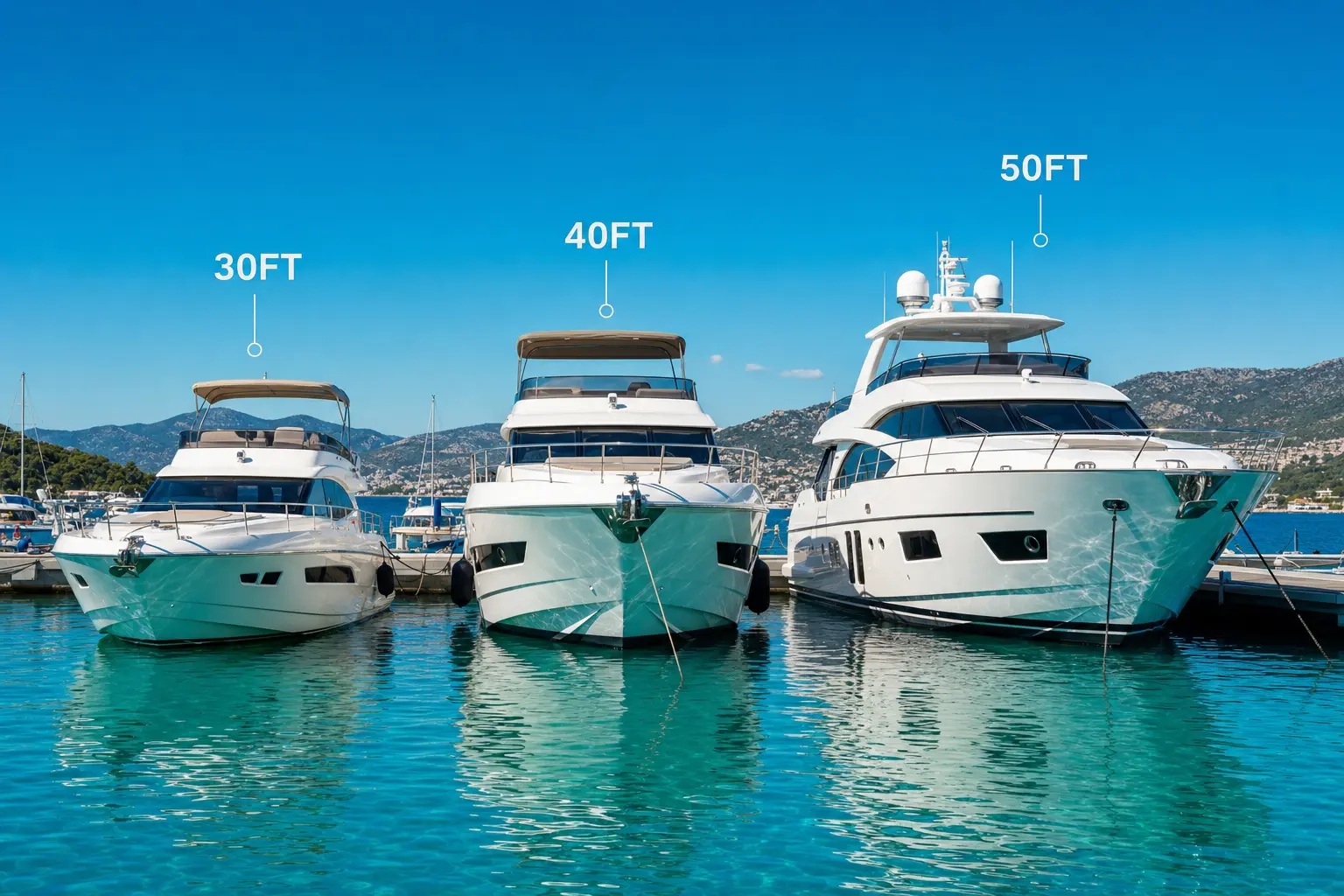
For many new sailors, a yacht in the 28- to 34-foot range is the sweet spot. It is large enough to feel like a real cruising boat, with a small galley, head, berths and inboard engine, yet still light enough to handle without a professional crew. Dock lines are manageable. Sails can often be reefed or trimmed by one person. If the approach to a berth goes badly, the consequences are usually less dramatic than on a heavier yacht.
A 30-footer also teaches seamanship honestly. Storage is limited, so you learn what matters. Systems are simpler, so maintenance is less mysterious. Many boats in this size range can be sailed by two people, and some by one experienced sailor in fair conditions. Marina fees, haul-outs, bottom paint and replacement rigging are all generally more affordable because most of these costs scale with length, displacement or both.
The trade-off is comfort. A 30-foot yacht can feel cramped after several days aboard, especially with children or guests. Tankage is modest. Motion at sea can be livelier because a shorter waterline tends to hobbyhorse more in a chop. But as a first yacht, it builds judgment quickly and at relatively lower cost.
The 40-foot yacht: more comfort, more consequence
A 38- to 42-foot yacht is often the size people imagine when they picture cruising. It may have two private cabins, a bigger cockpit, standing headroom, refrigeration, better tankage and enough range for coastal passages. The longer waterline can mean better average speed, and a heavier hull may feel calmer in a seaway.
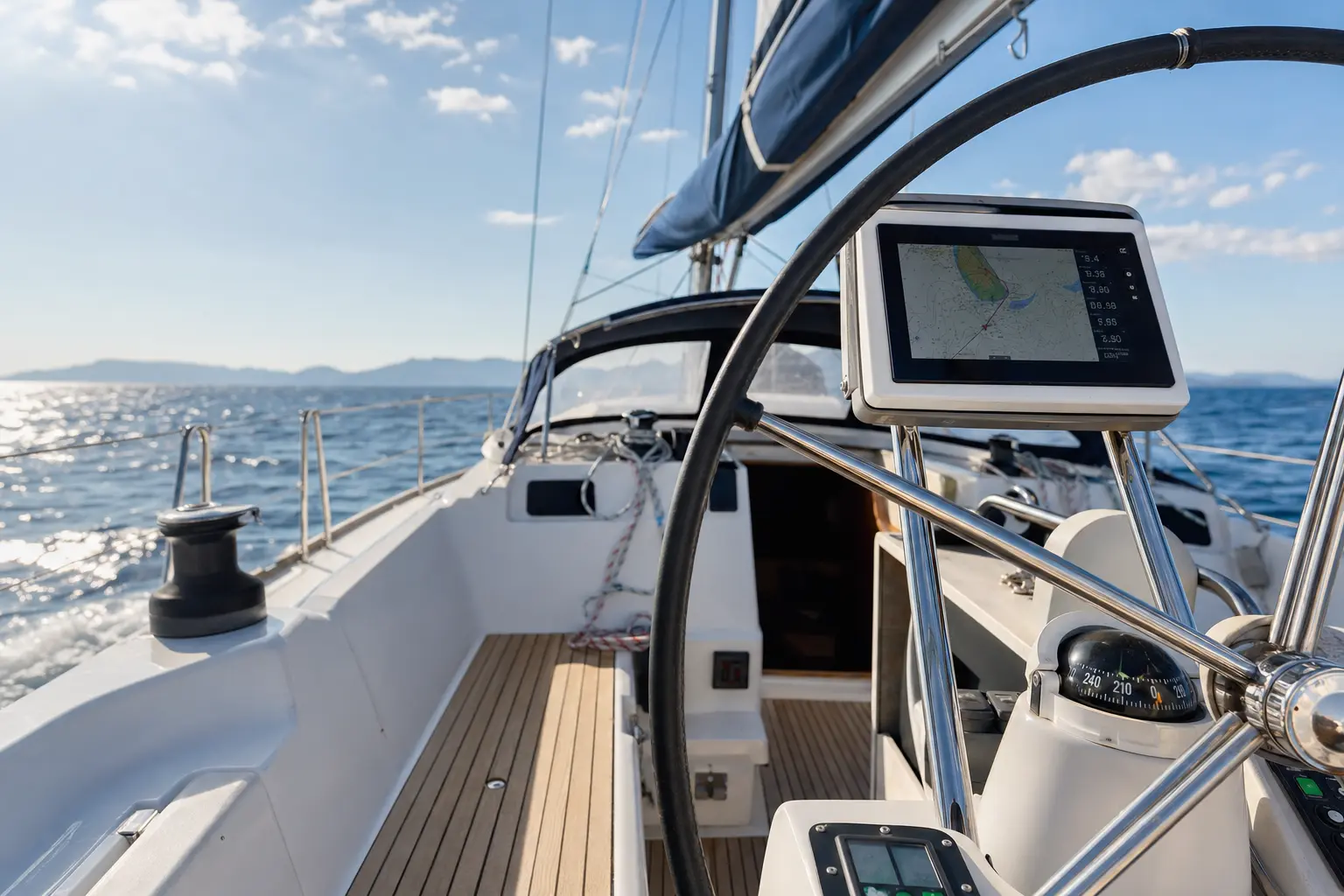
But 40 feet is also where the learning curve steepens. The boat carries more momentum. In a crosswind, it has more windage. Loads on sheets, halyards and dock lines rise sharply, and a poorly timed docking maneuver can become expensive. Modern gear helps: bow thrusters, electric winches, furling mainsails and chart plotters reduce workload. They do not replace judgment.
For beginners with strong instruction, a cautious sailing plan and a realistic budget, 40 feet can be a reasonable first yacht. It is often the largest size a competent couple can handle comfortably after training. The key is not simply buying the boat, but buying time on the water with a coach, practicing reefing, anchoring, man-overboard drills and tight-quarters handling before the first ambitious trip.
The 50-foot yacht: luxury with a crew-sized shadow
A 50-foot yacht can be magnificent. It may offer real cabins, large tanks, ocean-capable storage and the speed to cover ground. It also begins to behave less like a beginner’s platform and more like a small ship. Docking requires planning, not improvisation. Sails are powerful. Systems multiply: generators, watermakers, air conditioning, complex electrical banks, hydraulic or electric winches, multiple heads and more through-hull fittings to inspect.
Insurance companies may ask harder questions of a first-time owner at this size, particularly for offshore use. Marinas may have fewer suitable berths. Haul-outs can require larger travel lifts. A mistake with a 50-footer can damage not only your boat but the boats around you. This is not meant to frighten; it is simply physics and finance working together.
Could a beginner start at 50 feet? Yes, with professional instruction, a paid captain at first, and a sober budget. But for most new owners, it is not the best first step. It can turn sailing into management before the owner has learned the feel of a balanced helm or the quiet warning of weather building on the horizon.
Bigger than 50 feet: usually not a first yacht
Above 50 feet, a yacht may be marketed as easy to handle, and some modern designs are impressively automated. Yet automation can hide risk. A furling system jammed under load, a thruster failure in wind, or a generator fault at anchor can quickly expose inexperience. Larger yachts also invite larger itineraries, and distance magnifies small errors.
Unless the owner is committed to hiring crew or spending serious time in structured training, bigger than 50 feet is rarely the best yacht size for beginners. It may be the right second or third yacht, once habits are settled and limits are understood.
What size should you choose?
If you are a true beginner, start by defining the mission. For daysailing and weekend coastal cruising, 30 to 34 feet is hard to beat. For a family wanting comfort and regular coastal passages, 36 to 42 feet may be ideal if training is part of the plan. For extended cruising, 40 to 45 feet often offers the best balance between space, seaworthiness and owner-operated practicality.
Also consider the local sailing ground. A 30-footer is excellent in a tight harbor with short trips and easy weather windows. A 40-footer is more reassuring for longer distances or exposed coastlines. Draft matters too: a deep fin keel may sail beautifully but limit access to shallow anchorages. Beam affects interior volume but also marina availability. Displacement affects motion and handling more than length alone.
The verdict
The best yacht size for beginners is usually around 30 to 40 feet. Choose 30 feet if learning, simplicity and cost control matter most. Choose 40 feet if comfort and passage capability justify the added responsibility. Approach 50 feet only with training, crew support or substantial prior experience.
A first yacht should not be the biggest boat you can afford. It should be the boat that encourages you to sail often, make good decisions and come home with confidence. In sailing, confidence is not bought by the foot. It is earned, one well-handled departure and one quiet anchorage at a time.