Belize is not a place for sailors who want long, heroic passages and empty horizons. It is a place for sailors who like reading water: turquoise over sand, olive over turtle grass, ink-blue where the bottom falls away, and the hard pale line of reef where the Caribbean spends its energy before it reaches the cayes.
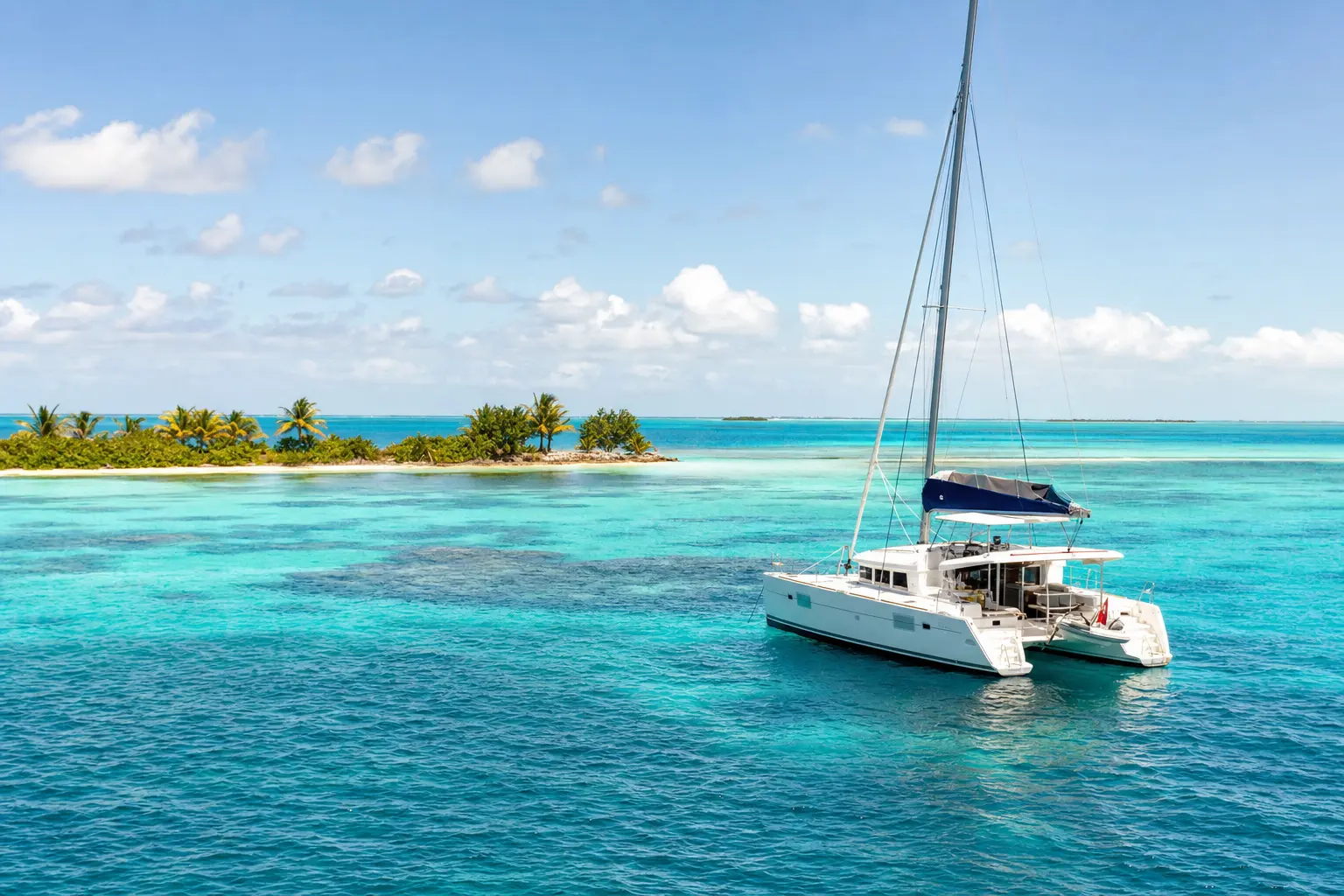
The classic Belize sailing route is a reef-side ramble, often starting from Placencia in the south or from the Belize City area farther north. The boat of choice is usually a catamaran, and not by accident. A cat’s shallow draft, wide cockpit and steady platform fit Belize’s geography better than almost any monohull. Here, the reward is not speed. It is access.
"In Belize, the destination is often under the boat as much as ahead of it."
Why Belize Is a Different Kind of Sailing Ground
The Belize Barrier Reef is part of the Mesoamerican Reef system, the largest barrier reef system in the Northern Hemisphere. Belize’s portion runs roughly 190 miles along the coast and was inscribed as a UNESCO World Heritage site in 1996. It was later placed on the List of World Heritage in Danger, then removed in 2018 after Belize strengthened protections, including a moratorium on offshore oil exploration. That arc matters: this is not just scenery. It is a national asset under pressure.
For sailors, the reef creates a protected inside passage dotted with cayes, mangroves and sandy anchorages. It also creates hazards. Coral heads can sit close to the surface, chart detail can be imperfect, and the safest navigation is still the oldest kind: good light, a bow watch and conservative decisions. Many charter companies restrict night sailing in Belize for good reason.
A Practical Seven-Day Route From Placencia
Placencia is the most natural base for a southern Belize sailing route. It has charter infrastructure, provisioning, airport access through nearby Placencia Airport, and quick access to some of the country’s loveliest cayes. A sensible first day is short: leave the lagoon, get used to the boat, and aim for a nearby anchorage such as Lark Caye or the Pelican Cayes, depending on weather and charter guidance.
From there, a route can arc northeast toward South Water Caye Marine Reserve, one of Belize’s largest marine reserves, covering about 117,875 acres. South Water Caye and nearby Tobacco Caye sit close to the reef edge, where the snorkeling can be immediate and vivid. Expect reef fish, rays and coral gardens, but also expect rules: park fees, mooring expectations and no anchoring on coral. The best crews treat these not as inconveniences but as the price of admission.
A middle section might include Blue Ground Range, Thatch Caye or Lagoon Caye. These stops deliver what Belize does especially well: quiet water, mangrove silhouettes, small lodges, and sunsets that make the cockpit feel like a private box at the theater. If conditions allow and your charter agreement permits, Ranguana Caye is a memorable southern stop, with bright sand and a castaway look. But Belize rewards flexibility. A route written in ink before departure should be held in pencil once the trade winds begin speaking.
North or South: Choose Your Belize
Northern itineraries, often connected to Caye Caulker and Ambergris Caye, offer more bars, restaurants and social energy. Caye Caulker’s motto, “Go Slow,” is both marketing and instruction. San Pedro, on Ambergris Caye, is busier and more developed. From this region, divers often dream of the Great Blue Hole at Lighthouse Reef Atoll, a nearly circular sinkhole about 1,000 feet across and more than 400 feet deep. But sailors should not treat it as a casual detour. It is offshore, exposed and usually better approached as a dedicated dive excursion unless the boat, crew, weather and permissions align.
The south feels wilder and more intimate. Placencia-based routes are often better for crews who want reef, quiet anchorages and shorter hops. For first-timers, I would choose the south. It has enough complexity to feel adventurous without turning the week into a logistics exam.
Why Catamarans Make Sense Here
Belize is catamaran country because the water is often shallow and the anchorages are more about comfort than drama. A typical charter catamaran draws around four to five feet, giving it more options around sandy patches and caye approaches than a deeper monohull. The wide deck is practical for drying snorkel gear, the saloon has panoramic visibility, and the platform is forgiving for travelers who are not hardened sailors.
There is a romance to a monohull heeled over in a fresh breeze. But Belize is not mainly asking you to heel. It is asking you to stop, swim, watch, and move carefully. On those terms, the catamaran is not a compromise. It is the correct tool.
Navigation, Weather and Reef Etiquette
The best season for Belize sailing is generally the drier period from late November through May, when easterly trade winds are common. The Atlantic hurricane season officially runs from June through November, and summer can bring heat, squalls and more unsettled weather. Even in prime season, local forecasts matter. Reef passes and exposed anchorages can become uncomfortable quickly when wind and swell line up the wrong way.
Good reef etiquette is not optional. Use moorings where provided. Anchor only in sand, never coral or seagrass where prohibited. Do not touch coral; it is living animal structure, not rock. Know the rules for fishing, lobster and conch seasons, and marine reserves. Belize’s beauty depends on many small acts of restraint.
What to Pack Beyond Sunscreen
Bring polarized sunglasses, preferably with a backup pair; they are navigation equipment in Belize. Reef-safe sun protection, a long-sleeve rash guard, water shoes, a dry bag and a reliable headlamp all earn their place. Download charts and cruising notes before departure, but do not confuse an app with judgment. Paper briefings, local knowledge and the charter company’s no-go zones should be taken seriously.
Provisioning should lean simple: fresh fruit, rice, tortillas, eggs, coffee, plenty of drinking water and easy dinners for nights when the crew is too sun-tired to cook ambitiously. Local restaurants and island lodges can fill in the gaps, but not every caye is a village. Belize’s charm is partly that it still has places where there is nowhere to buy anything at all.
The Real Route Is a State of Mind
A good Belize sailing route is less a list of pins than a rhythm: sail in the morning light, arrive early, snorkel before the afternoon glare, eat simply, sleep with hatches open if the bugs allow it, and start again. The reef sets the boundaries. The cayes provide the punctuation. The catamaran becomes the movable porch from which you watch a country of water reveal itself.
Belize is not the easiest charter ground in the Caribbean, but it may be one of the most instructive. It teaches sailors to slow down without becoming passive, to look closely without grabbing, and to understand that navigation is not merely getting somewhere. Sometimes it is learning how not to damage the place that brought you there.