
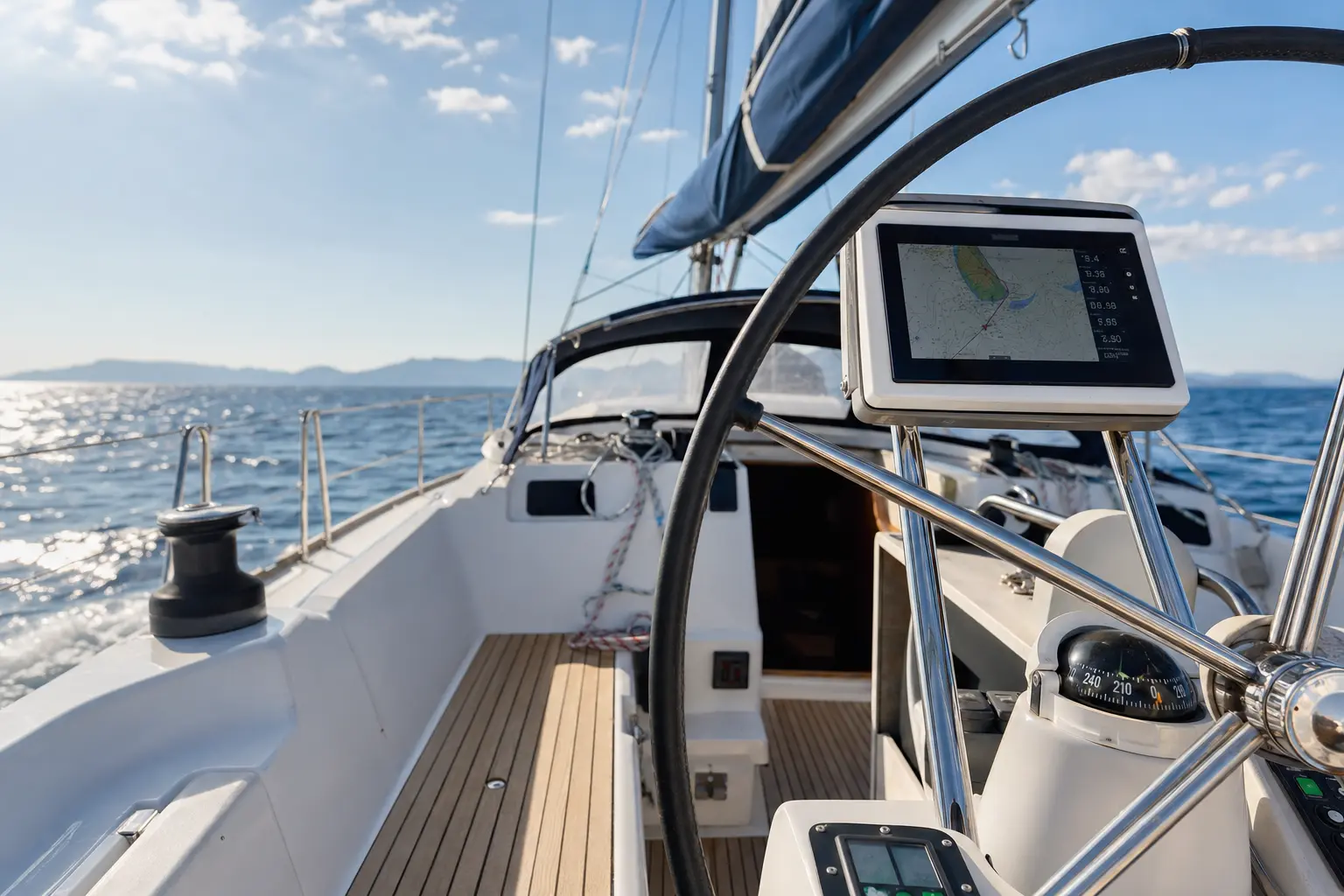
Autopilot on sailing yachts has become so common that many skippers now regard it as basic equipment, somewhere between the chart plotter and the bilge pump. That is understandable. A good pilot steers without complaint, frees a short-handed crew to reef, navigate or make coffee, and can turn a long passage from an endurance test into a manageable watch system.
But the central truth is often missed: an autopilot is not a substitute for seamanship. It is an amplifier of it. If the yacht is well balanced, the sails are trimmed thoughtfully and the electrical system is healthy, the pilot looks brilliant. If the boat is over-canvassed, dragging its rudder and starved of power, even an expensive unit will seem stupid.
The first question is not electronics. It is balance.
The most important autopilot component is not the control head, the compass or the drive unit. It is the boat itself. Sailing yachts are dynamic machines, and a pilot has to fight every bad habit the skipper leaves in the system.
A yacht with excessive weather helm forces the rudder to work as a brake. The pilot responds with constant corrections, using more electricity and wearing the drive. Ease the mainsheet, flatten the main, move the traveler down, reduce headsail power or reef earlier, and the autopilot may suddenly seem twice as capable. This is not magic. It is physics.
On a balanced boat, the pilot makes small, patient movements. On an unbalanced boat, it saws at the helm. That difference matters offshore, where autopilot failure is not merely inconvenient. It can turn a tired crew into a vulnerable one.
"A well-trimmed sail plan is the cheapest autopilot upgrade you will ever buy."
Drive units matter more than glossy screens
Autopilots are often sold through visible features: displays, networking, remote controls and slick integration with instruments. Those are useful. But the drive unit is the muscle, and its sizing is critical.
Wheel pilots and tiller pilots can be excellent for smaller yachts and coastal cruising, but they have limits. They are exposed, relatively easy to overload and often less suited to heavy displacement boats or rough offshore work. Below-deck linear, rotary or hydraulic drives are typically stronger and better protected, though they cost more and require careful installation.
The key specification is displacement and steering load, not just length overall. A beamy 38-foot cruising yacht carrying full tanks and gear may demand far more from a pilot than a light racing boat of similar length. Manufacturers publish limits, but prudent sailors leave a margin. Choosing a drive that is barely adequate is like buying an anchor that works only in good weather.
The compass is the brainstem
An autopilot steers by sensing heading and movement. Older systems relied heavily on fluxgate compasses. Modern pilots often use solid-state sensors with rate gyros and motion processing, sometimes described as nine-axis sensors. The point is simple: the better the pilot understands yaw, pitch and roll, the better it can anticipate rather than merely react.
Sensor placement is not a detail. A compass mounted near speakers, high-current cables, tools or other magnetic interference can feed the pilot bad information. Calibration also matters. Swinging the compass and commissioning the pilot properly may sound tedious, but poor calibration can show up later as wandering courses, unnecessary rudder movement and loss of trust.
Trust is the invisible currency here. A skipper who does not trust the pilot ends up watching it constantly, which defeats part of the purpose. A skipper who trusts it blindly is courting trouble. The useful middle ground is earned by testing the system in varied conditions before relying on it offshore.
Power consumption is a safety issue
Autopilots are among the larger electrical consumers on a cruising sailboat, especially in waves and breeze. The draw varies widely by drive type, sea state, sail balance and how aggressively the pilot is tuned. A unit that sips power in flat water may become hungry when the stern is being kicked around by a quartering sea.
This is where energy planning becomes seamanship. Solar panels, alternator output, battery capacity and charging routines should be considered alongside the pilot, not after it. Lithium batteries have changed the equation for many yachts by allowing deeper usable capacity and faster charging, but they do not remove the need for a proper charging plan and safe installation.
A simple rule helps: if the autopilot is essential to how you sail, the boat needs enough electrical resilience to run it when conditions are poor, nights are long and the crew is tired.
Wind mode is powerful, but not always wise
Many sailing autopilots can steer to a compass heading, a wind angle or a route from a plotter. Each mode has a place. Steering to apparent wind can be superb upwind, keeping sails drawing efficiently as the wind shifts. On long reaches, it can reduce flogging and help performance.
But wind mode deserves respect. If a squall shifts or accelerates the wind, the pilot will do what it was asked to do: maintain the wind angle. That may not be what the crew wants. Downwind, a sudden wind shift can raise the risk of an accidental gybe if the system and sail plan are not managed carefully. Preventers, conservative sail choices and alert watches still matter.
Route steering can also be seductive. A plotter can command the pilot toward a waypoint, but it cannot absolve the crew from collision avoidance, traffic rules, fishing gear, lobster pots or a lee shore. The International Regulations for Preventing Collisions at Sea still require a proper lookout. No autopilot changes that.
Tuning is not optional
Autopilot tuning affects comfort, power consumption and mechanical wear. Gain, response level, counter-rudder and sea-state settings vary by brand, but the principle is consistent. Too little response and the boat wanders. Too much and the pilot oversteers, wasting energy and speed.
The best tuning happens underway, in real conditions. Flat-water harbor tests are useful, but they do not reveal how the pilot behaves with following seas, reefed sails or a confused chop. Skippers should learn what the settings do before they need them. The manual is not beach reading, but it is cheaper than a burned-out drive.
Redundancy separates cruisers from gamblers
Offshore sailors often carry spares for the autopilot: belts, pins, fuses, rams, hydraulic fluid or even a complete backup tiller pilot for emergency use. Some long-distance yachts add windvane self-steering, a mechanical system that uses wind and water power rather than electricity. Windvanes are not perfect, and they require their own learning curve, but they can be invaluable on ocean passages.
At minimum, crews should be able to hand-steer comfortably and know how to disconnect the pilot quickly. Emergency tiller access should be clear, not buried under cockpit cushions and spare dock lines. The moment to discover the system is jammed is not during a night squall.
What matters most
The best autopilot for a sailing yacht is not simply the newest or most expensive. It is the one correctly sized for the boat, installed cleanly, fed with reliable power, calibrated carefully and used by sailors who understand sail balance.
In that sense, autopilot is a revealing technology. It exposes lazy trim, weak wiring, overloaded boats and unrealistic passage plans. It also rewards good habits. On a well-run yacht, it becomes something close to an extra crew member: quiet, tireless and, within its limits, deeply dependable.
The modern sailor should embrace it, but not worship it. Let the autopilot steer. Let seamanship remain in command.