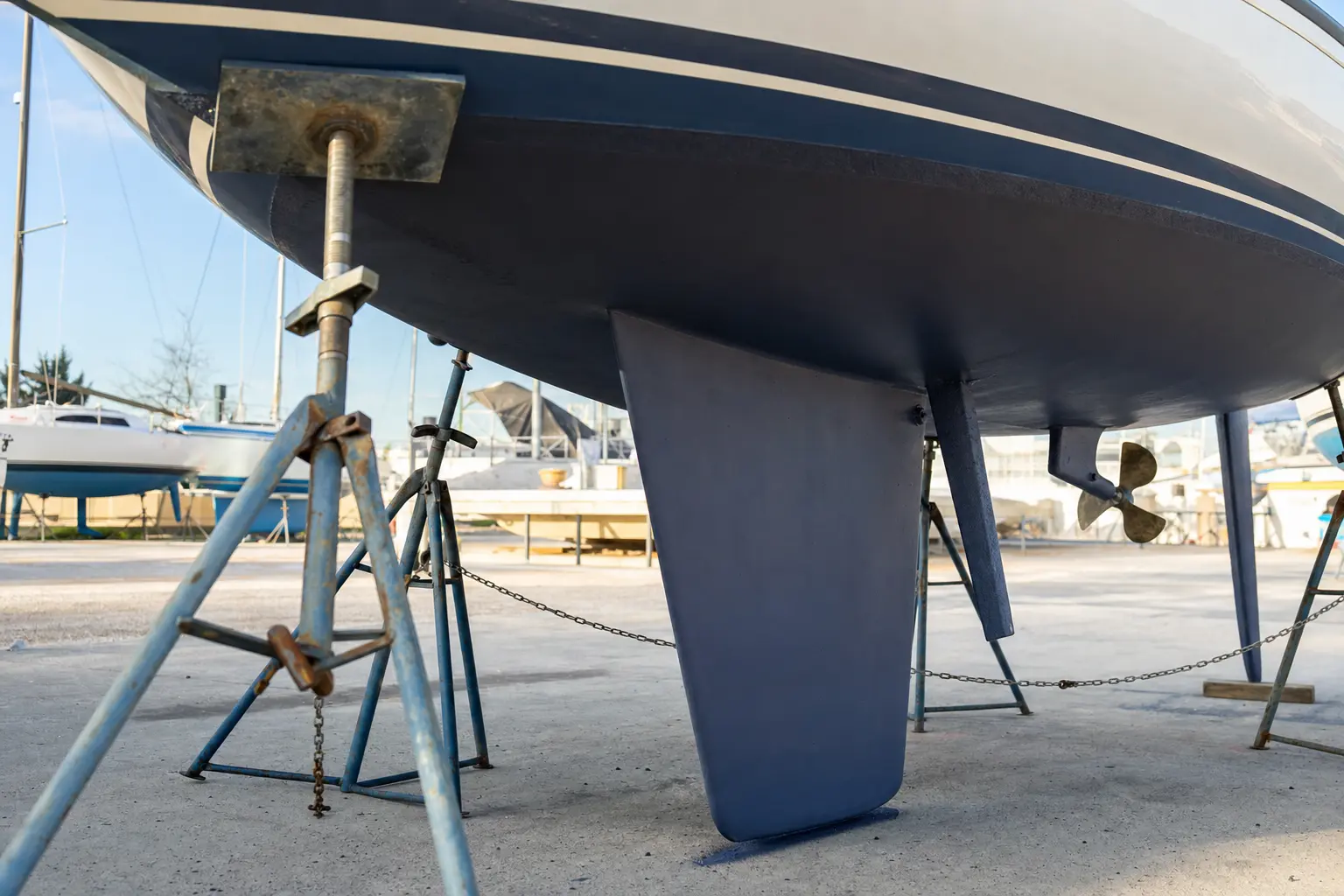
Antifouling is one of those unglamorous subjects that quietly separates well-kept boats from expensive surprises. It is the coating applied to a hull below the waterline to slow the growth of barnacles, slime, weed and other marine life. Left unchecked, fouling can reduce speed, increase fuel burn, strain engines and make a sailing yacht feel strangely unwilling in light air.
The basic idea is simple: make the underwater surface hostile, slippery or sacrificial enough that organisms struggle to settle. The details are not simple at all. A boat in warm, nutrient-rich Florida water faces a different problem from one hauled every winter in Maine or kept in a cool freshwater lake. The right choice depends on where the boat lives, how often it moves, what it is made of and how much maintenance the owner is prepared to do.
Why fouling matters more than it looks
A clean hull is not just cosmetic. Even light slime creates drag. On sailboats, that drag is felt immediately: poorer acceleration after a tack, lower pointing ability and a duller feel on the helm. On powerboats, fouling can mean higher fuel consumption and lower top speed. Propellers, saildrives, rudders and thru-hulls are especially vulnerable because complex shapes give organisms places to grip.
Antifouling is not a once-a-decade improvement. It is a recurring part of owning a boat that lives in the water.
Modern antifouling paints do this job largely with biocides, most commonly copper compounds, though copper-free and foul-release systems are increasingly common. The important historical note is what should not be used: tributyltin, or TBT, once prized for effectiveness, was banned internationally for most vessels under the International Maritime Organization’s Anti-Fouling Systems Convention because of severe environmental harm.
The main types of antifouling paint
Hard antifouling dries to a durable surface that slowly releases biocide. It is often chosen for faster boats, racing yachts or boats that are scrubbed by divers because it can tolerate more abrasion than soft paints. The trade-off is buildup. If new coats are added season after season without proper removal, the old layers can become thick, brittle and uneven.
Ablative antifouling, also called eroding paint, wears away gradually as the boat moves through water. That wearing action exposes fresh biocide and reduces long-term paint buildup. It is popular with cruising sailors because it is predictable and forgiving. But if the boat sits unused for long periods, the self-polishing effect is limited, and some paints may lose effectiveness faster.
Self-polishing copolymer paints are a more controlled form of ablative technology. They are engineered to erode at a steadier rate, which can make them effective for boats with regular use and for owners who want multi-season performance. They are usually more expensive, but the cost can be justified if haul-outs are difficult or marina labor is high.
Copper-free antifouling uses alternative biocides such as zinc pyrithione, econea-based formulations or other compounds, depending on the brand and local regulations. These paints are often used on aluminum hulls and metal components, where copper can create galvanic corrosion problems if the system is not properly isolated. They also appeal in waters where copper discharge is tightly scrutinized.
Foul-release coatings are different. Usually silicone or fluoropolymer based, they do not poison growth so much as make it difficult for organisms to stick. They can be excellent on frequently used boats, especially fast motor yachts and some commercial vessels. But they demand careful surface preparation, can be costly to apply and may be less forgiving if the boat sits idle.
What antifouling really costs
Costs vary widely by region, yard policy and hull condition. For a modest 30- to 35-foot sailboat in the United States, a straightforward annual bottom job can easily run from about $1,500 to $4,000 when haul-out, blocking, pressure washing, sanding, masking, paint and labor are included. Larger yachts, heavy buildup, blister repairs or premium coatings can push the bill much higher.
Paint itself is only part of the price. A gallon of quality antifouling often costs roughly $200 to $400, with some premium products above that range. Many boats require one to three gallons depending on length, beam, keel design and the number of coats. Yard labor is the larger variable. Sanding an old bottom safely is slow work, and environmental rules often require dust collection, tarps and proper waste handling.
Do-it-yourself owners can save money, but not as much as they may hope. Haul-out fees, storage days, rollers, tape, protective clothing, respirators and disposal costs add up. The bigger question is skill. Poor preparation is the most common reason antifouling fails early. Paint applied over loose layers, incompatible coatings or damp surfaces may peel long before the biocide is exhausted.
Maintenance cycles: one year, two years or more?
In warm saltwater with year-round growth, many boats need attention every 12 months, sometimes sooner if they sit still. In cooler climates with a short boating season, a good coating may last two seasons. Some self-polishing systems are marketed for multi-year use when applied at the specified thickness, but the owner must follow the manufacturer’s instructions closely.
Usage matters as much as geography. A boat that sails weekly often keeps its ablative coating active. A boat that remains in a slip for months may develop slime and barnacles even with good paint. Diver cleanings can extend performance, but aggressive scrubbing can shorten the life of ablative coatings and may violate marina or local water-quality rules in some areas.
A sensible rhythm is to inspect the bottom whenever the boat is hauled, watch speed and fuel burn, and keep notes on the paint used, number of coats and launch date. Owners often forget what was applied two seasons ago. That small record can prevent costly compatibility mistakes.
Choosing the right system
The best antifouling is not necessarily the most expensive. A racing sailor may prefer a hard, burnishable bottom. A family cruiser in Chesapeake Bay may be better served by a high-quality ablative. An aluminum expedition yacht needs special caution around copper. A fast boat used frequently might benefit from a foul-release system, while a rarely used boat may not.
Before buying, ask three practical questions: What works on nearby boats in the same marina? What does the paint manufacturer say about your hull material and previous coating? What maintenance schedule can you honestly keep? Local knowledge is valuable because fouling is intensely local. Two harbors a few miles apart can behave differently because of temperature, current, sunlight and nutrient levels.
The bottom line
Antifouling is part chemistry, part seamanship and part budgeting. It protects performance, reduces fuel waste and keeps a boat healthier below the waterline. But it is not magic. The winning formula is the right coating, careful preparation and a maintenance cycle matched to real conditions. A clean bottom may not be visible from the dock, but every skipper feels it the moment the boat starts to move.